
Last updated November 25, 2026
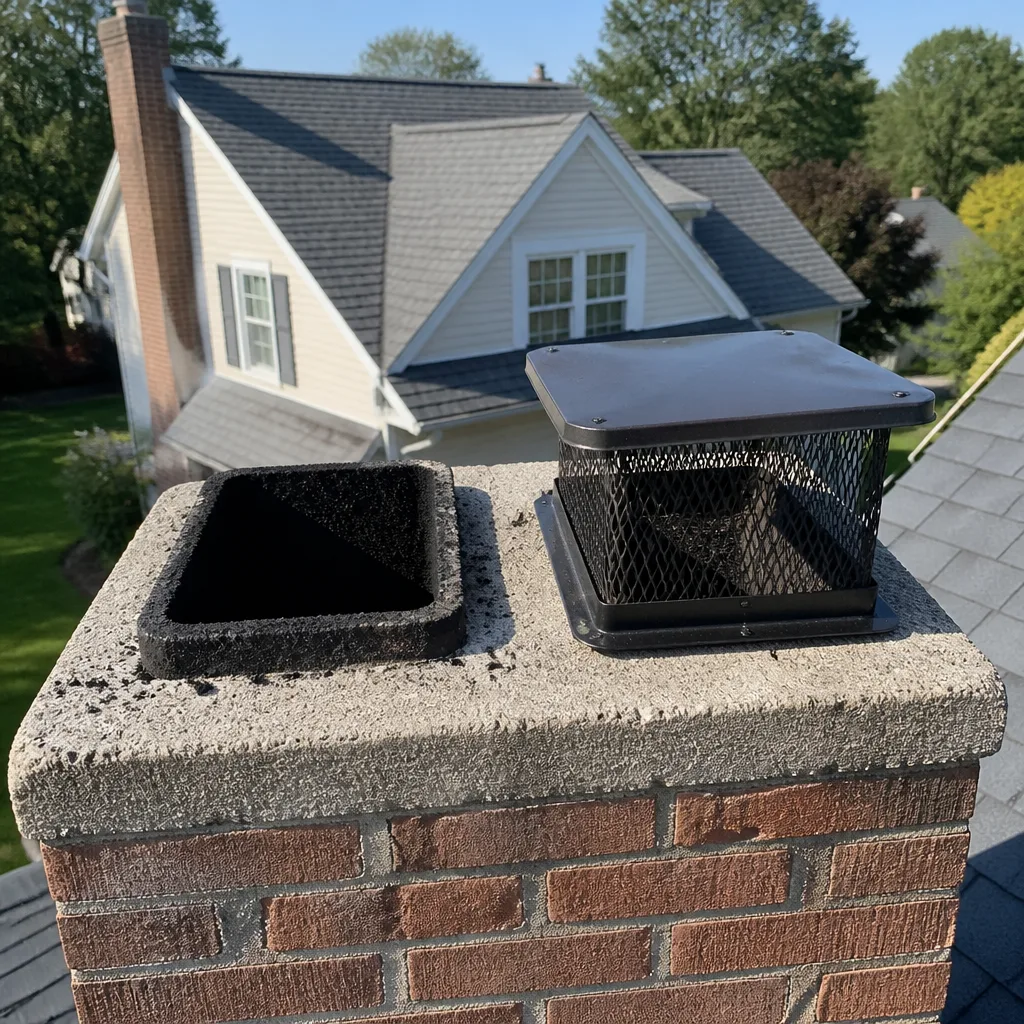 Sweep & inspection
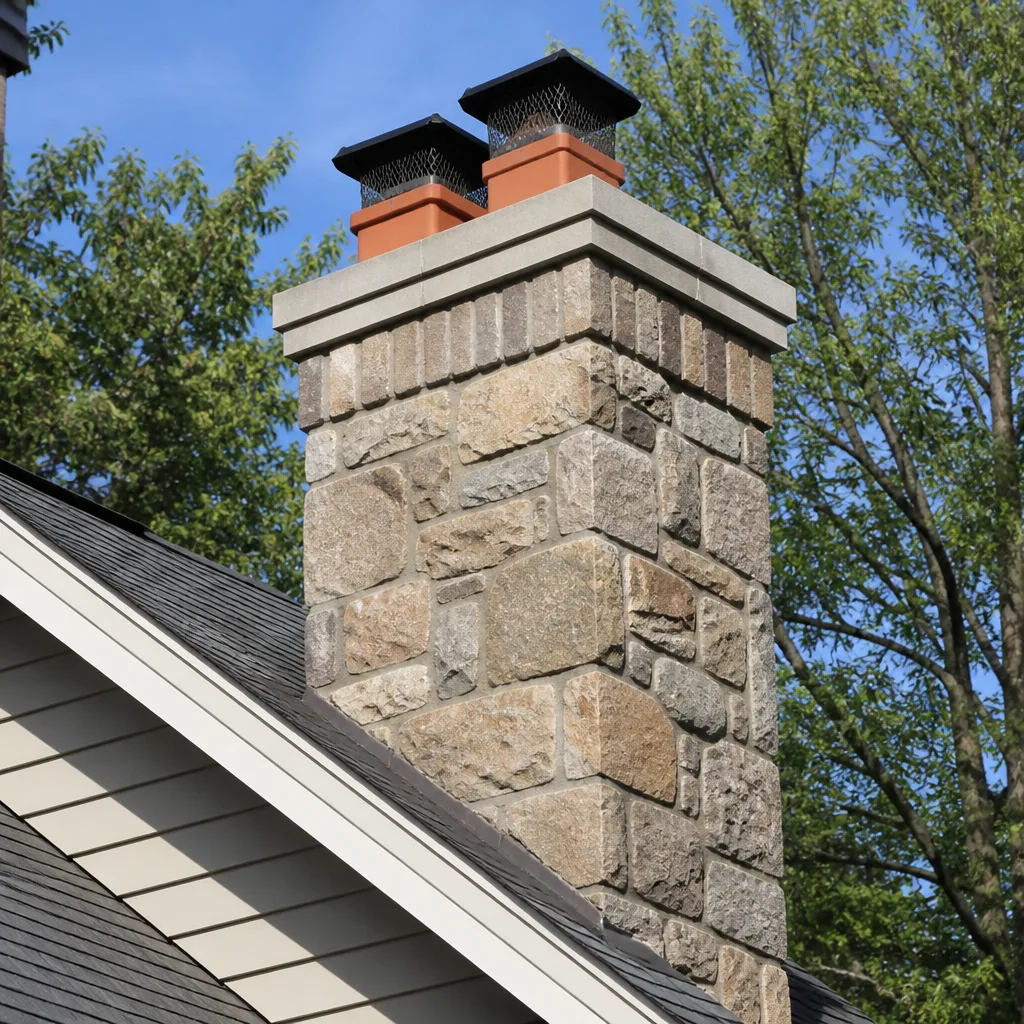 Caps & crowns
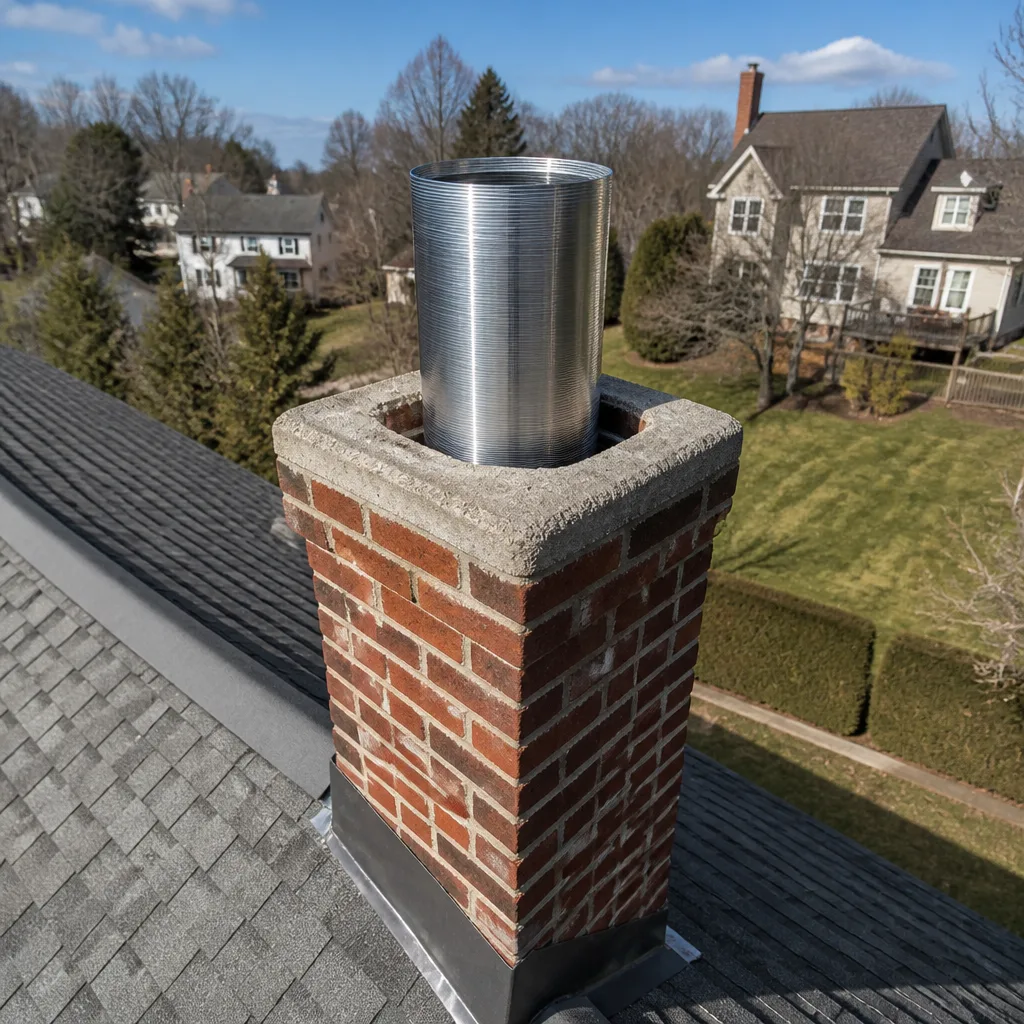 Flue relining
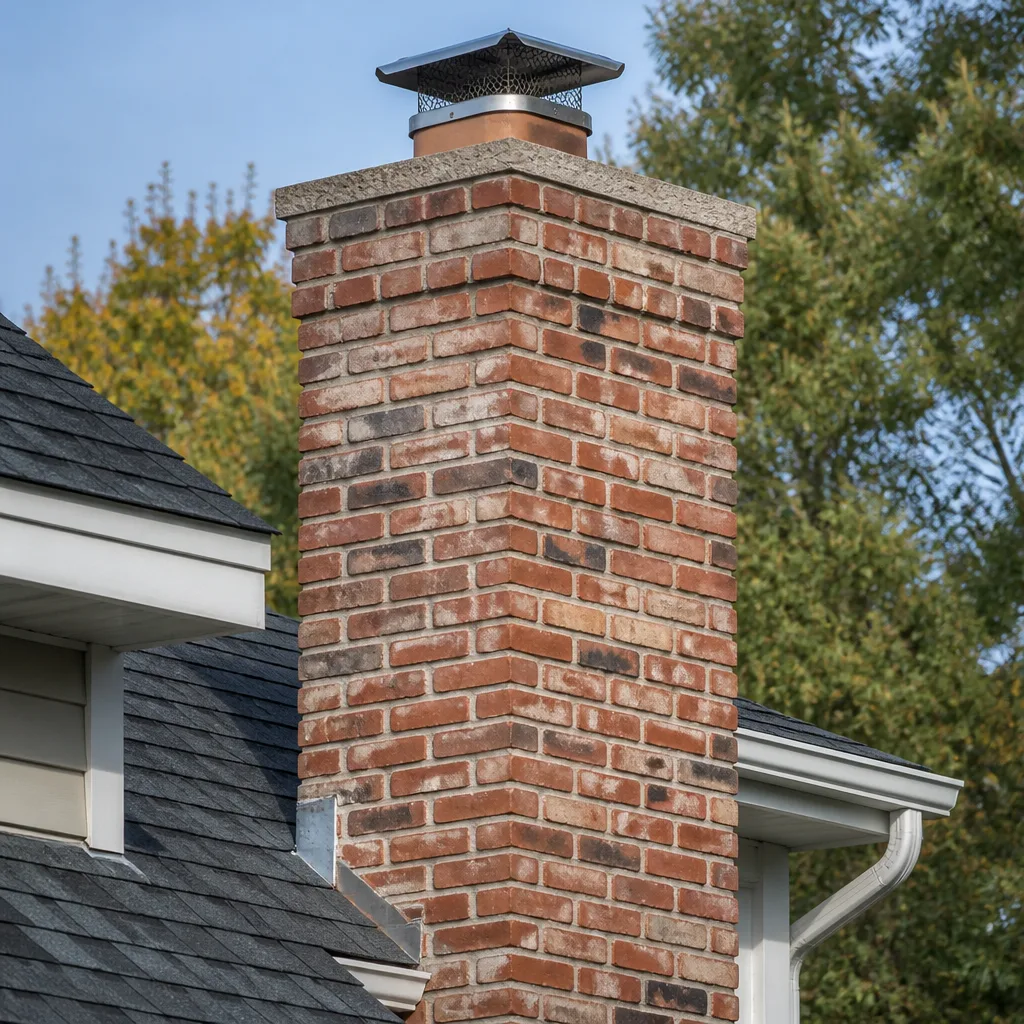 Masonry repair
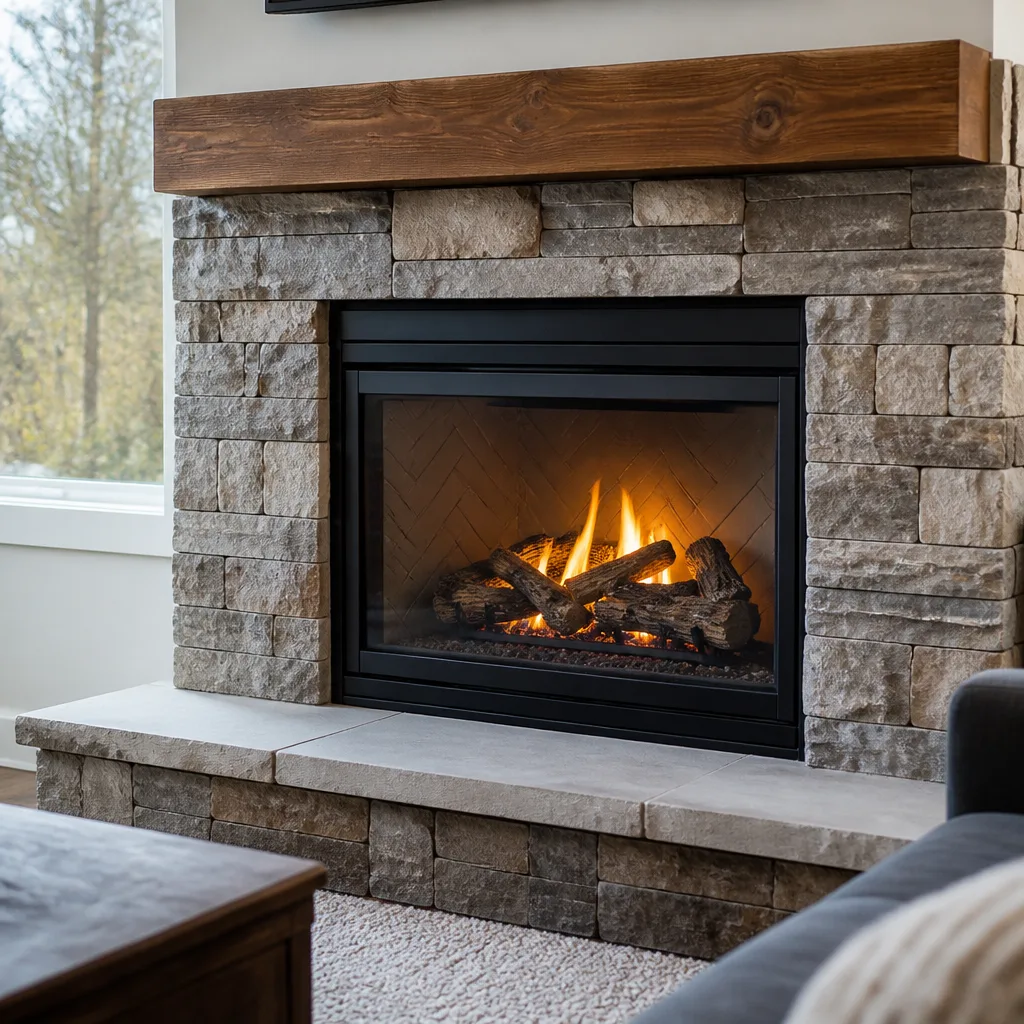 Gas fireplace service
Level 1 sweep and inspection to the NFPA 211 annual standard - flue, crown, cap, and flashing checked and photographed
Chimney sweep logs do not sweep chimneys. They loosen some creosote - which then falls where a brush and vacuum still have to collect it.
Chimney Cleaning Warning Signs: A Wakefield Homeowner’s Reference Guide
Chimney fires don’t announce themselves. By the time most homeowners notice something is wrong, the evidence has usually been sitting in plain sight for months or even years. The problem is that the signs that matter most are quiet. A fireplace that smokes is obvious, but a flue liner with hairline cracks is invisible until the day it isn’t. A musty smell gets blamed on a drafty house. Gray powder on the smoke shelf gets mistaken for ash. In our experience, the calls that come in after a real failure almost always trace back to a warning sign someone walked past a hundred times without recognizing it. This guide covers the subtle signals that show up well before a chimney becomes a hazard, what each one actually means, and when it’s time to act in Wakefield.
Quick Answer
The most serious chimney cleaning warning signs are flaky or honeycomb-textured creosote visible on the damper or flue walls, a sharp acrid smell when the chimney is cold, rust streaks inside the firebox, and white or gray staining on the exterior brick. These point to creosote buildup, water intrusion, or a deteriorating liner, all of which call for a professional inspection before the next fire. Contact Wakefield Chimney Sweep Co at (833) 513-8375 for a free estimate.
Styles & brands we work with
- Sweep & inspection
- Caps & crowns
- Flue relining
- Masonry repair
- Gas fireplace service
Table of Contents
- The Five Sensory Warning Signs You Can Detect Without Tools
- Visual Signs Inside the Firebox Most Homeowners Walk Right Past
- Draft Problems Decoded: Back-Puffing, Spillage, and Slow Starts
- Exterior Warning Signs Visible from Ground Level
- The One Interior Sign That Means Stop Before the Next Fire
- How Often Should a Wakefield Chimney Actually Be Cleaned?
- When to Book a Cleaning in Wakefield’s Climate
- Common Mistakes to Avoid
The Five Sensory Warning Signs You Can Detect Without Tools
Most chimney problems announce themselves through the senses long before a tool comes out. You don’t need a flashlight or a brush to notice them, which is exactly why they’re worth learning. These are the cues we ask homeowners to describe over the phone, and each one points to a specific condition inside the flue.
- A sharp, acrid smell when the chimney is cold. This is the strongest early indicator of creosote accumulation and often a sign that some of it has glazed onto the flue walls. It smells like burnt fuel and old smoke concentrated in one place, not like wood burning.
- A musty, damp smell during warm months. That points toward water intrusion rather than creosote. Masonry that has absorbed moisture smells earthy and old, and it usually means a failed cap, crown, or flashing is letting water in.
- Smoke that lingers in the room after the fire dies. Healthy chimneys pull smoke up and out. Smoke that hangs after the burn is done suggests a partial blockage or a draft that’s not strong enough to clear the firebox.
- Excessive soot on the glass doors or firebox walls. A thin haze is normal. A thick, fast-forming black coat means incomplete combustion, which usually starts with wet wood or restricted draft.
- A dull, hollow thud when you tap the masonry instead of a solid ring. Safe masonry sounds dense. A hollow response can indicate flue tiles that have cracked or crumbled loose from the surrounding brick.
Any one of these signals is worth a closer look. Two of them together is reason enough to book a chimney sweep and inspection before the next fire. The reason these cues matter so much is that they surface early, while the fix is still small. Water intrusion caught at the first musty smell is a crown repair; caught a year later, it’s a rebuild.
Visual Signs Inside the Firebox Most Homeowners Walk Right Past
The firebox is the most examined part of a fireplace and still the most overlooked. People look at it constantly while a fire is going, but they rarely look at the parts around the fire, which is where the diagnostics actually live. Bring a flashlight and look at these spots when the firebox is cold and clean.
- Glaze on the damper. The metal damper plate should be dull. A black, shiny film on the damper or its frame means creosote has condensed and cooled on a surface close to the fire. It’s a direct signal of how much has also accumulated up the flue.
- Gray powdery deposits on the smoke shelf. The smoke shelf sits just behind the damper, where creosote flakes and ash collect. A little is normal. A thick layer of gray powder, especially one with a crusty texture, means the sweep interval has been stretched too far.
- Rust streaks on the firebox back wall. Those orange-brown trails aren’t from a wet log. They show water making its way down the flue and drying on the firebrick. Rainwater is almost always getting in through a failed chimney cap & crown or flashing.
- Discoloration or crumbling on the firebrick mortar joints. Joints should be tight and even. Rounded or receding mortar is a sign of repeated moisture cycling or a slow leak behind the firebrick.
- Spalling on the firebox walls. Small pockmarks where firebrick has popped off in flakes point to thermal shock or chronic moisture, both of which weaken the firebox over time.
Every one of these is fixable, and most are fixable by the same company that does the sweep, which is why Wakefield handles fireplace repair alongside cleaning. When the sweep and the repair are the same visit, there’s no handoff, no second crew, and no chance the repair report and the sweep report disagree about what’s wrong.
Draft Problems Decoded: Back-Puffing, Spillage, and Slow Starts
Draft complaints are the most common reason homeowners call us, and the most commonly misdiagnosed. Three different drafts mean three different things. Getting the distinction right is often what saves a homeowner from a repair they don’t need.
Back-Puffing
Back-puffing is a rhythmic pulsing of smoke and air into the room, almost like the chimney is breathing in the wrong direction. It’s typically a pressure problem, not a blockage. The chimney isn’t strong enough to overcome the negative pressure inside the house, so the fire pushes back. Modern tight homes in Wakefield are especially prone to this because they’re sealed more tightly than older construction. Opening a nearby window a crack is a useful test; if the puffs stop, the chimney itself is often healthy and the issue is house pressure or a flue that’s undersized for the appliance.
Smoke Spillage
Spillage is smoke leaking steadily into the room at the firebox opening, not pulsing. It points to a draft problem caused by a partial obstruction, a flue-to-firebox mismatch, or a cold flue that never warmed up. It’s the one draft issue most likely to be a cleaning problem, since a partially blocked flue can’t pull properly.
Slow-Starting Fires
Fires that take a long time to catch and burn weakly usually indicate a cold flue or an oversized flue relative to the firebox. A large open flue cools the smoke before it can rise, so the fire struggles. Sometimes the answer is a pre-warm with a rolled newspaper, and sometimes it’s a liner sized correctly for the appliance. That second fix is where a flexible system like DuraFlex makes it possible to correct an odd flue shape without tearing out masonry.
In all three cases, the first move is a proper inspection. Wakefield diagnoses draft problems as part of the standard inspection and can tell you which of the three you’re dealing with, and whether the fix is a sweep, a cap adjustment, a liner, or nothing at all.
Exterior Warning Signs Visible from Ground Level
You can learn a lot about a chimney without climbing on the roof. The exterior of the chimney tells its own story in staining patterns, displaced masonry, and separated metal. Walk the outside of your home with a pair of eyes, not a ladder, and look for these.
- Cap displacement. A chimney cap that’s crooked, lifted on one corner, or missing entirely is the single most common cause of the water damage we see. A cap is a few dollars of metal and one of the highest-value parts on the whole chimney.
- Flashing separation. The metal flashing where the chimney meets the roof should sit tight and lap evenly. Lifted or pulled flashing lets water run down behind the masonry, where it soaks the brick and eventually finds the flue.
- White, chalky staining on brick. This is efflorescence, salt pushed out as moisture moves through the brick and evaporates. It signals chronic water intrusion and points to the flashing or the crown.
- Dark, rust-colored staining. Rust streaks on the exterior masonry typically indicate a corroded cap, a metal chase cover, or fasteners that have failed and are letting water behind the finish.
- Cracks or crumbling in the crown. The crown is the concrete cap on top of the chimney that sheds water away from the masonry. A cracked or flaking crown is a slow-leak generator, and it’s the classic reason a chimney that looks fine from the ground needs a crown repair rather than a rebuild.
The crown is the part of the exterior that fails first in almost every case. It’s an unsung component and the one we recommend checking every year. If the crown is sound and the flashing tight, most exterior problems never happen. If they’re both failing, water gets into the masonry and the interior signs follow within a season or two.
The One Interior Sign That Means Stop Before the Next Fire
Honeycomb or flaky creosote on the damper or visible flue walls is the one sign that should stop you from lighting the next fire. Not the next annual sweep, not the next cold snap, not next season. Now. Stage three creosote, the kind that’s flaky, crusty, or honeycomb-textured, is highly combustible and is the fuel behind chimney fires. Its presence on the damper or the flue walls tells you the buildup above is at least as severe. Call before lighting another fire.
What makes this sign especially dangerous is that it’s not a subtle clue to a repair. It’s a direct indication that the system is one ignition away from a serious event. The fire can burn through a flaky creosote layer at high temperatures, and if the flue is already compromised by cracks or failed tiles, the heat and gases can reach the chimney structure and the home. Carbon monoxide can also back-draft into a house if a flue becomes blocked or breached while the fire is burning. Those are the two reasons a full inspection matters before the fire is lit, not after.
If you’ve spotted flaky or honeycomb creosote, don’t run a brush up the flue yourself. That stage of buildup is best handled by a trained technician who can sweep it safely and inspect for the liner damage that often comes with it. Professional-grade liner and restoration products exist specifically because these problems are common. HeatShield, for example, can resurface a deteriorating flue interior in some cases without a full liner replacement, which is a repair option many sweep companies simply can’t offer.
Wakefield Chimney Sweep Co uses Wakefield Chimney Sweep Co on every job and inspects for hidden liner damage as part of a standard sweep. Our technicians have up to 14 years of experience, and they’ll tell you plainly whether you can use the fireplace this season or need to stop until the repair is done.
How Often Should a Wakefield Chimney Actually Be Cleaned?
Ask five chimney companies and you’ll get three different answers, most of them a round number. The honest answer is that frequency depends on how much you burn and how efficiently the wood burns, not on a calendar. The widely cited rule of thumb is an annual inspection, with sweeping whenever the creosote layer reaches about 1/8 inch. For most wood-burning households in Wakefield, that works out to a sweep every one to three years, and an inspection every year regardless.
What changes the math:
- Burn volume. A fireplace used several nights a week all winter builds creosote much faster than an occasional weekend fire.
- Wood moisture. Seasoned wood burns hot and produces less creosote. Wet or green wood produces more smoke and more of the deposits that fuel a chimney fire.
- Fireplace type. An open fireplace and a modern inserted stove behave very differently. Gas fireplaces need inspection too, mostly for venting and carbon monoxide risk, even though they don’t produce the same creosote.
- The last cleaning. If the last sweep left visible residues on the smoke shelf or damper, the interval should be shortened.
For a wood-burning household in Wakefield that runs the fireplace most evenings through winter, we generally recommend a sweep and inspection every one to two seasons, and an inspection annually regardless. If you aren’t sure where you stand, the inspection is the place to start. It gives you a real number for the creosote depth instead of a guess.
When to Book a Cleaning in Wakefield’s Climate
Fall is when every chimney company in Wakefield gets busy, and it’s also the worst time to be told you need a repair before you can use the fireplace. The smarter move is to book a sweep before the burning season starts, typically late summer or early fall, so that if the inspection turns up a liner or crown issue there’s still time to schedule the repair before the first cold snap.
The Wakefield climate supports this. Summers are hot and humid enough that masonry holds moisture, and that moisture is the reason a musty smell shows up in July even when the fireplace sat unused since March. Getting a humid season inspection gives you a clear read on water intrusion earlier in the year, when a crown repair or flashing fix is small. Waiting until December means measuring the water damage rather than preventing it.
Cold snaps also drive the classic mid-winter call, where a homeowner lights the first fire of the season and discovers the chimney smoked all night. The cause is usually a partially blocked flue, a cap that came loose in a fall storm, or a draft problem that shows up only in cold weather. None of these get better by waiting, and scheduling ahead puts you in line before the season crowds in.
We answer 24/7. Fast dispatch, 7am-7pm. If it’s late and you’re worried about a cracked flue, a call outside dispatch hours is booked into the next opening, Sunday through Friday, 7am to 7pm. The estimate is free and the price is set per job by the written estimate.
Common Mistakes to Avoid
- Treating a musty smell as a drafty house. A damp, earthy smell inside a chimney is a water intrusion signal, not a ventilation issue. In Wakefield, catch the crown or flashing at that stage and you skip the rebuild entirely.
- Burning unseasoned wood to “save money.” Green wood produces more creosote and more smoke and takes more heat to burn, so it costs you in sweeping and fuel. Seasoned wood is the cheapest chimney maintenance available.
- Skipping the inspection because the fireplace “looks fine.” Liner cracks, cracked flue tiles, and stage-two creosote are almost always invisible from the firebox. The annual inspection is what makes the difference between a repair and a rebuild.
- Hiring a sweep that does the sweep and nothing else. If the same company can’t repair the crown, the cap, the firebox, or the liner, you end up with a report, a second contractor, and two opinions that don’t quite match. Wakefield handles the full system in one visit.
- Restoring a chimney with hardware-store materials. General-purpose caulk and commodity concrete don’t hold up around a chimney. Professional lines like Copperfield, HeatShield, and DuraFlex exist because the chimney environment is uniquely hostile to standard materials.
- Assuming a gas fireplace doesn’t need inspection. A gas fireplace produces no creosote but still has a vent path, and venting problems are where carbon monoxide becomes a real risk. Annual inspection matters here too.
- Lighting a fire after seeing flaky creosote on the damper. That’s the one sign that should end the season until the chimney is swept and inspected. It’s the difference between a sweep and a fire in the chimney.
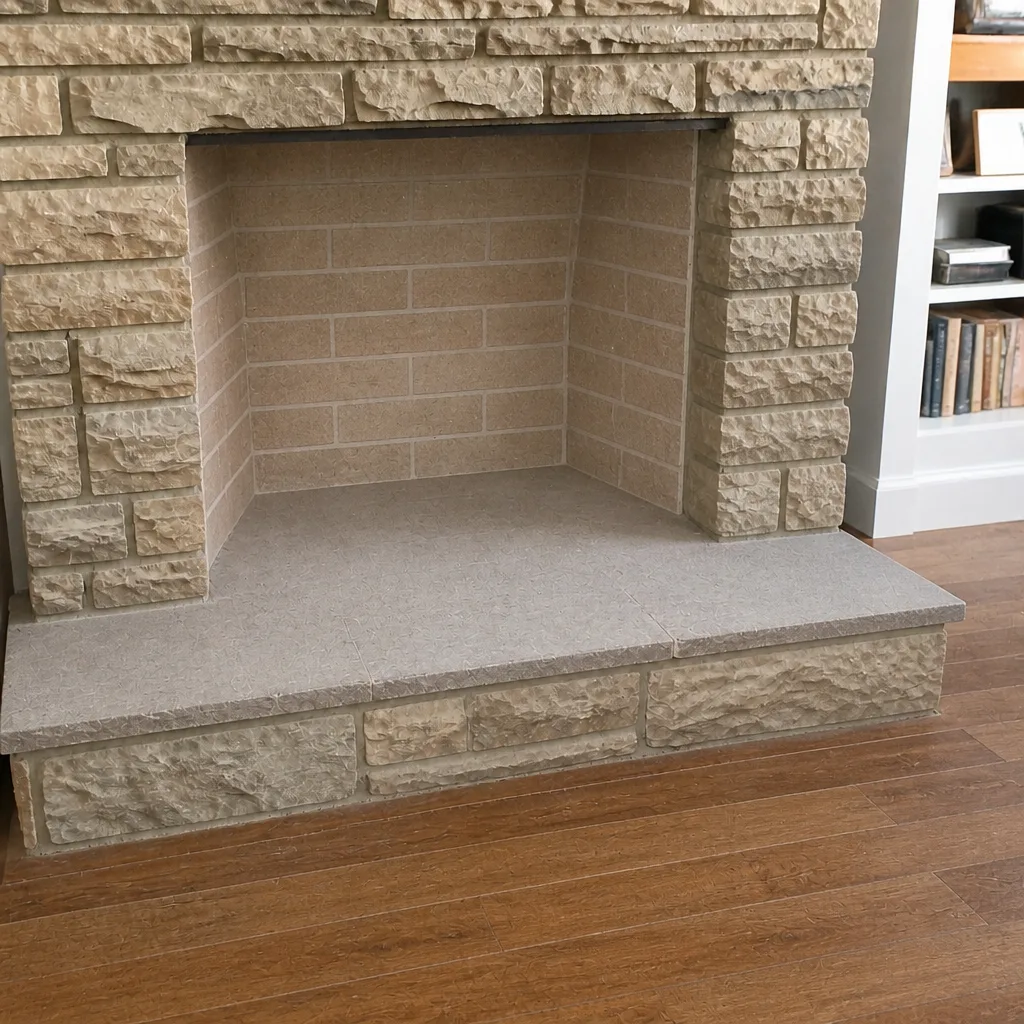
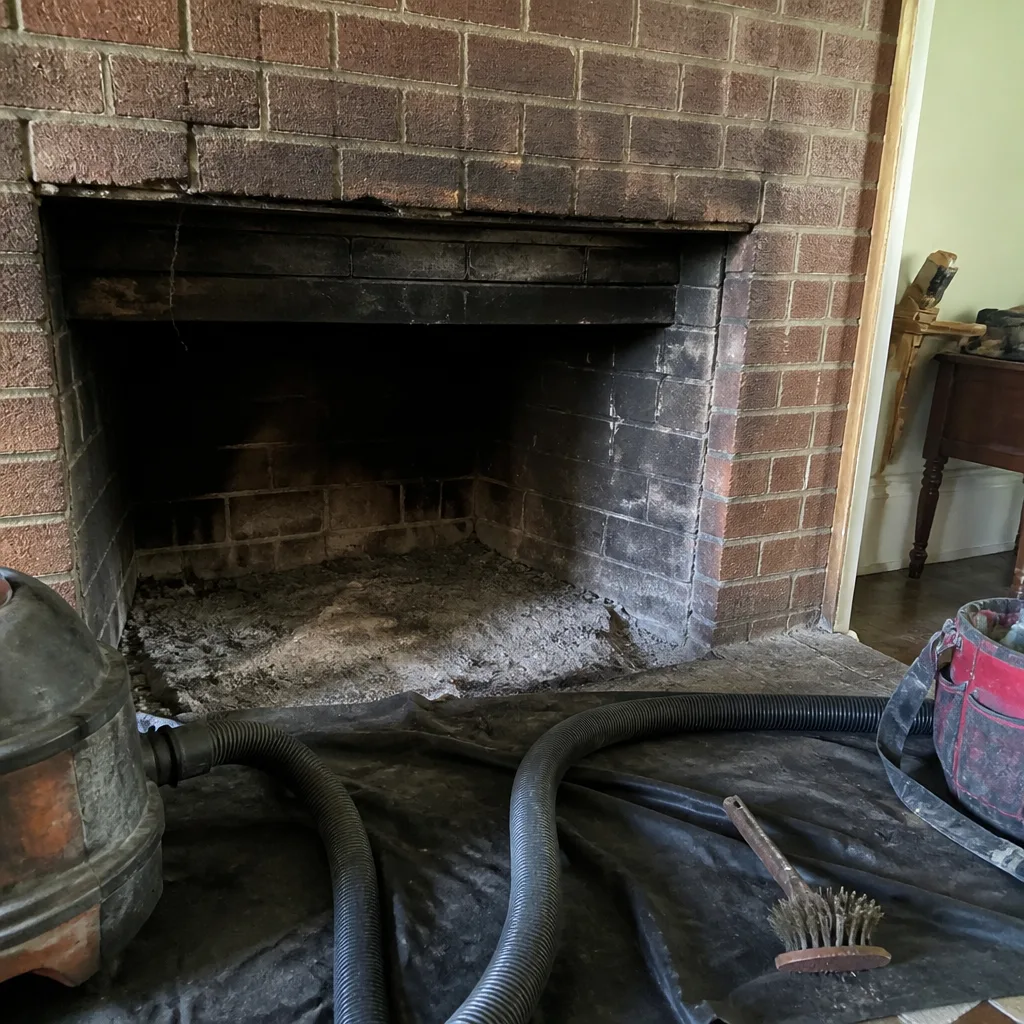
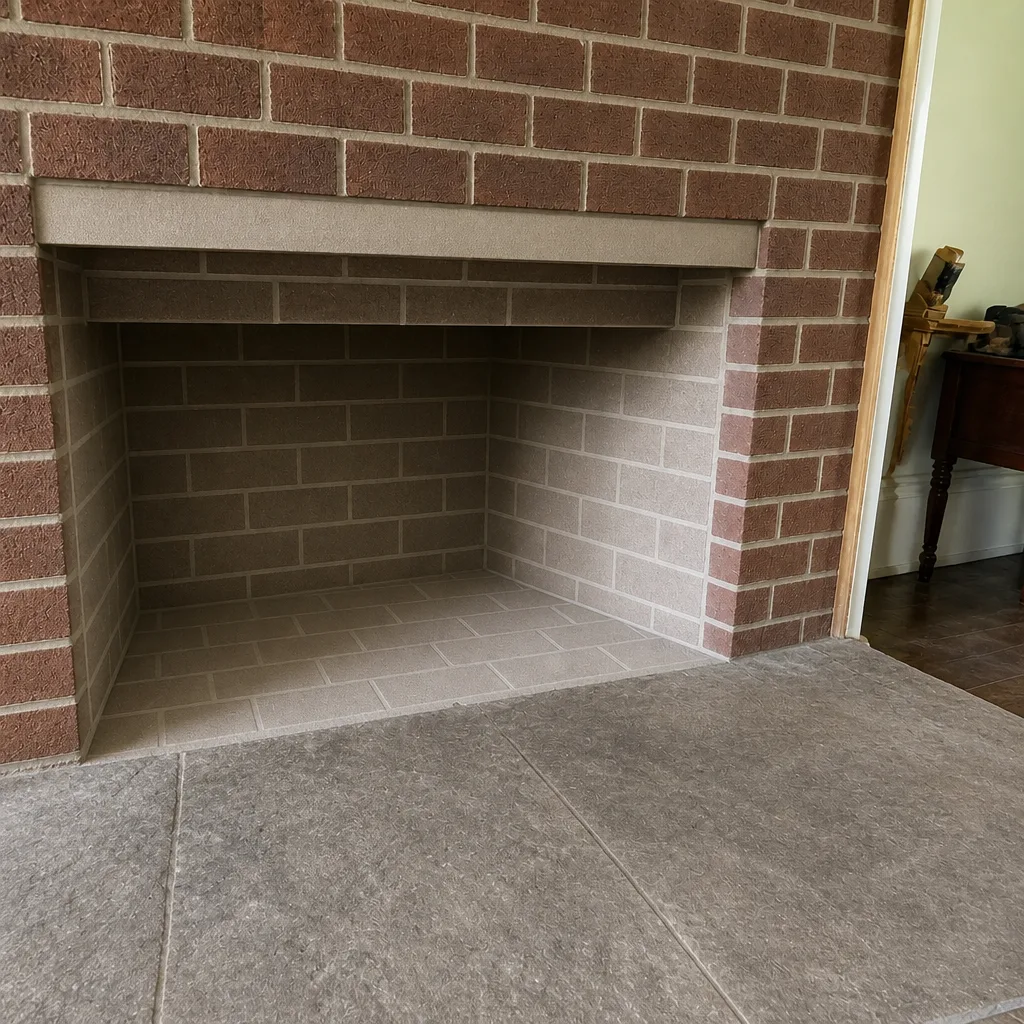
See the difference
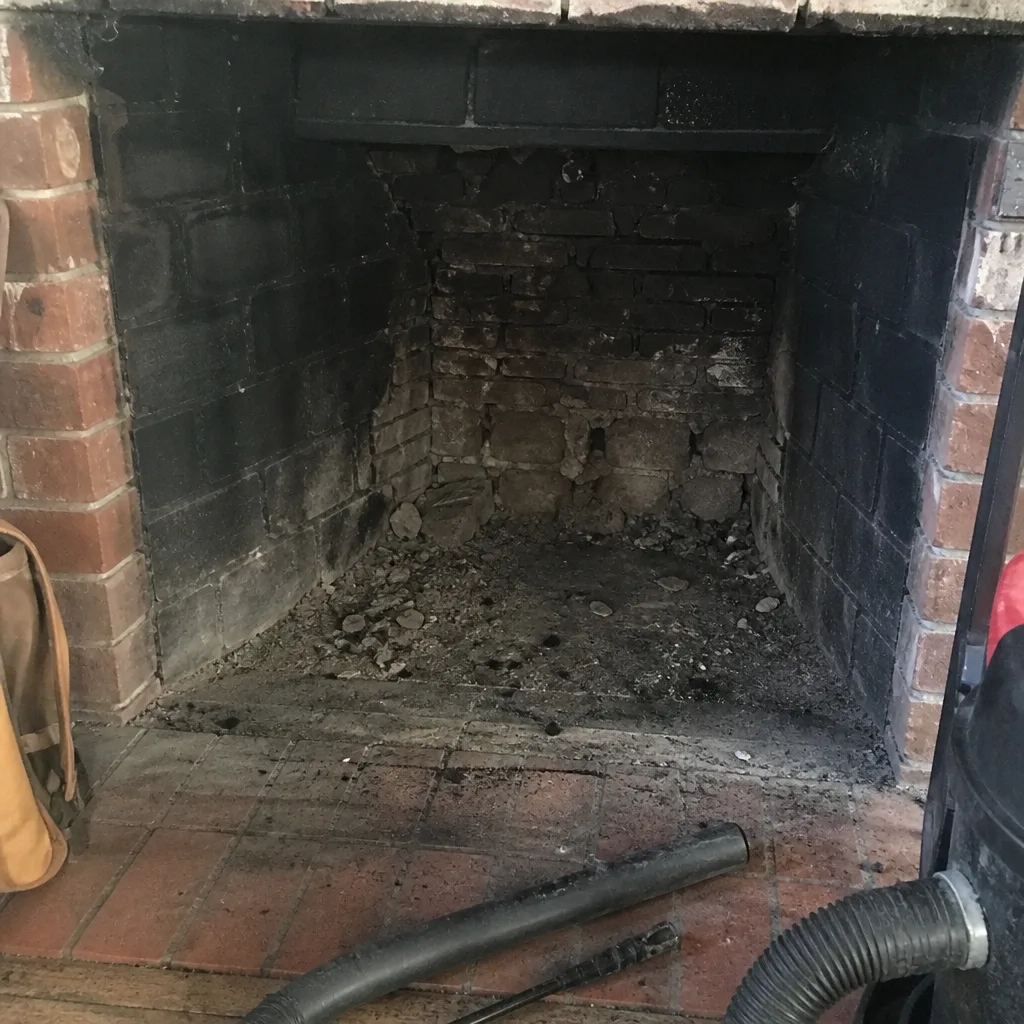 Before
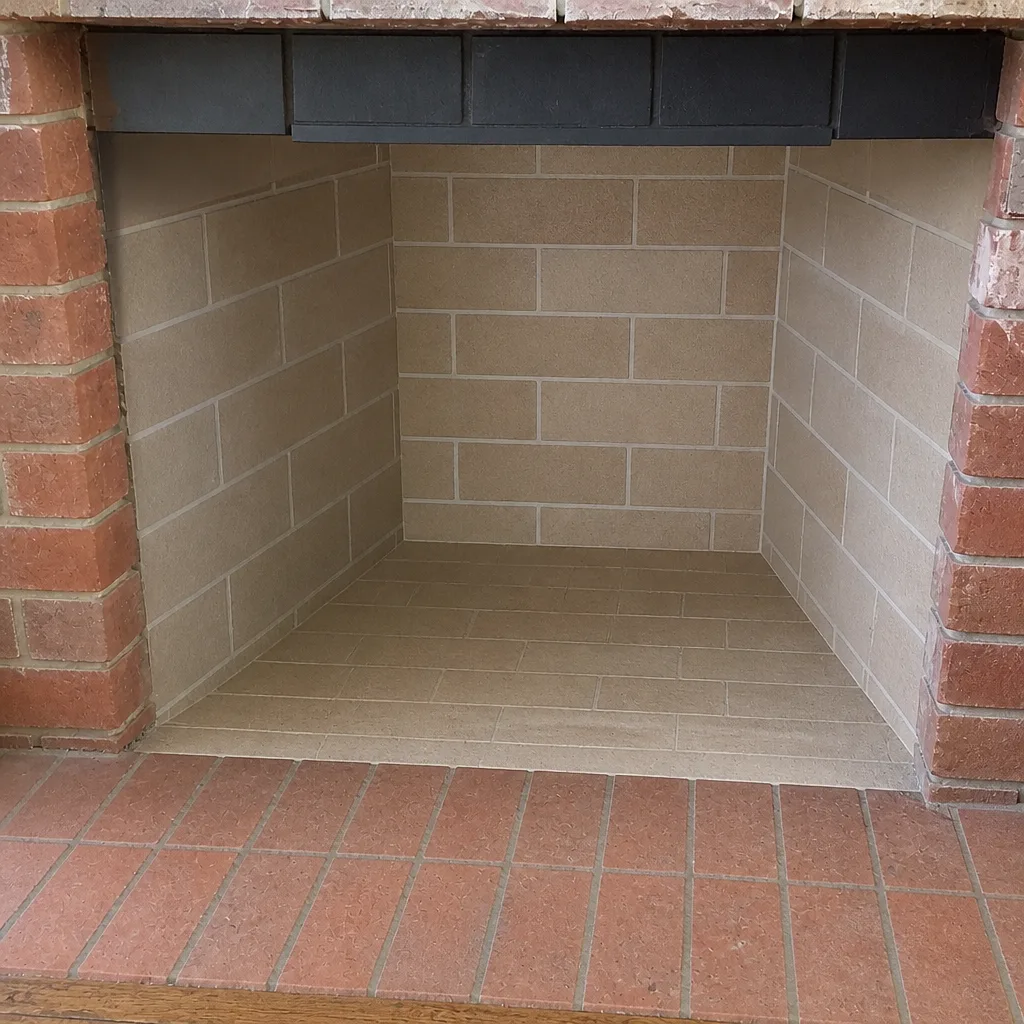 After
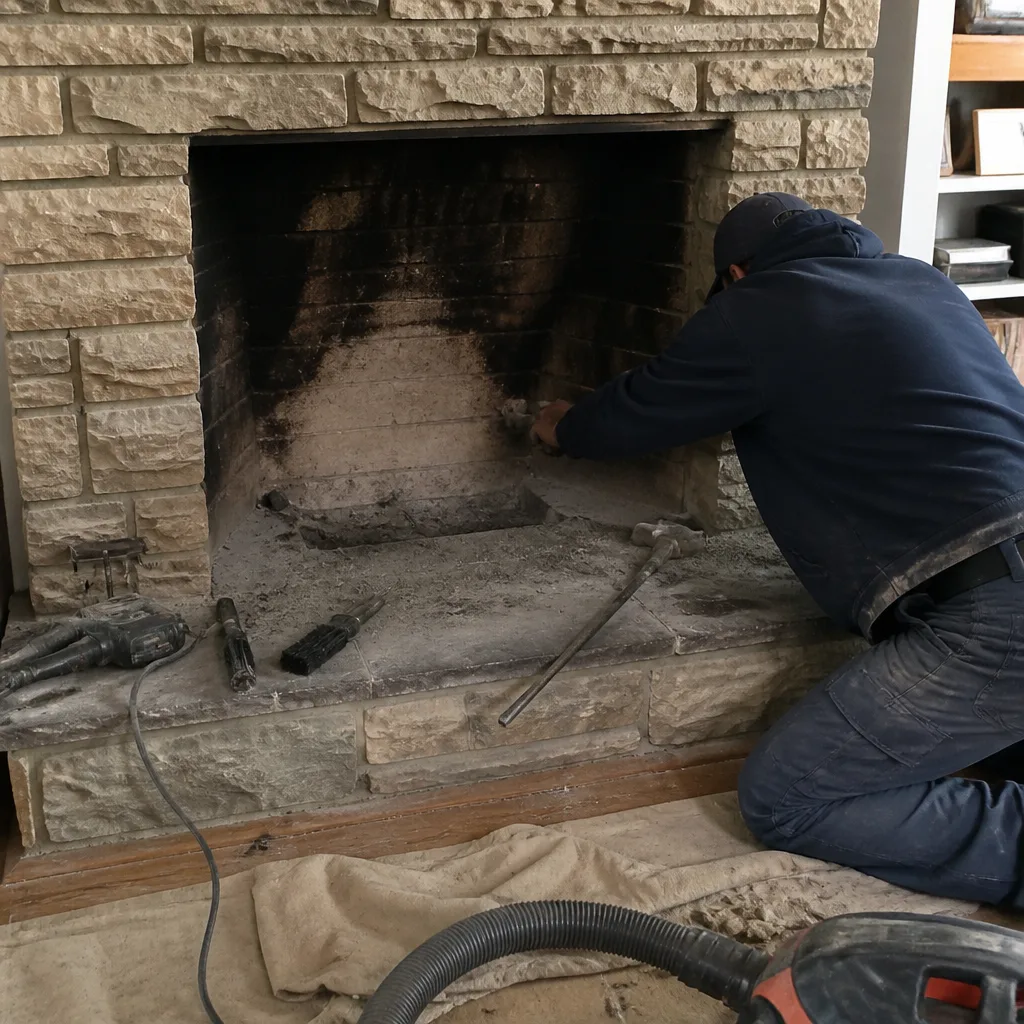 Before
 After
 Before
 After
When to Call a Professional
Some warning signs are a good reason to book a sweep at your convenience, and a few are a reason to call before you light another fire. Call us before the next fire if you’ve seen flaky or honeycomb creosote on the damper or visible flue walls, if the chimney smells sharp and acrid when the firebox is cold, if you have rust streaks inside the firebox or white staining on the exterior brick, or if the crown is cracked or a cap is missing. Those signals point to conditions that can become a chimney fire or a carbon monoxide problem, and they shouldn’t wait for a convenient weekend. Book a cleaning at your convenience if you’ve had a smoky fire, notice heavy soot, or simply haven’t had the chimney looked at in over two years.
Every visit includes a camera inspection and a written report we go through with you, so nothing is recommended that you can’t see for yourself. The local pro is licensed and insured as their state requires, and the price is set per job by the written estimate. Call Wakefield Chimney Sweep Co at (833) 513-8375 for a free estimate. We answer 24/7. Fast dispatch, 7am-7pm, Sunday through Friday.
Frequently Asked Questions
Most chimney cleaning in Wakefield is a fixed price per job based on what the inspection finds, and the written estimate you get before we book sets the exact cost. If we find liner damage, crown problems, or a repair beyond the sweep, we’ll show you the camera footage and the photo report and quote the repair separately. Call (833) 513-8375 for an exact quote. Estimates are free.
Honeycomb creosote looks like a crusty, flaky, porous layer, almost like charcoal or burned pastry, stuck to the flue walls or damper. It’s often dark brown to black with a bubbled or pitted texture, and it can shed pieces when touched. If you see it, stop lighting fires and call for a sweep and inspection. Call (833) 513-8375 to schedule.
Creosote builds in layers, and the thicker the layer the hotter it burns if ignited, so a well-maintained chimney with a light dusting becomes one with a thick combustible coating over a season or two. The result can be a chimney fire that damages the flue, or a blocked flue that sends carbon monoxide into the house. Neither is a fix-it-later situation. Call (833) 513-8375 before your next fire if you’re unsure of your last sweep.
That depends entirely on what the inspection finds, and any trustworthy answer starts with camera evidence. A sweep alone is enough when the creosote is light and the liner is sound; a repair is needed when the liner is cracked, the crown is failing, or the flue walls are deteriorated. We don’t recommend anything you can’t see on the report, and we’ll tell you plainly when work can safely wait. Call (833) 513-8375 for a free estimate.
Most wood-burning households in Wakefield need a sweep every one to three years, with an annual inspection no matter what. The number that actually decides it is creosote depth, not the calendar, and an inspection gives you that number. If you burn most evenings through winter, lean toward a sweep every one to two seasons. Call (833) 513-8375 to get on the schedule ahead of burning season.
Yes. Wakefield handles sweeping, inspection, cap and crown work, fireplace repair, and chimney repair in the same company, so the findings from an inspection are resolved by the team that made them. We work with professional-trade brands including DuraFlex, HeatShield, Copperfield, Olympia Chimney, Famco, and Gelco, and our technicians have up to 14 years of experience. Call (833) 513-8375 for a free estimate.
The Bottom Line
The warning signs that matter most are the quiet ones. A sharp smell in a cold chimney, gray powder on the smoke shelf, a rust streak on the firebox back wall, or a chalky stain on the exterior brick, none of these look dramatic, and that’s why they get ignored. The one sign you shouldn’t ignore for even one fire is honeycomb or flaky creosote on the damper or visible flue walls. Handle that before you light the next fire and you avoid the two outcomes that actually matter: a chimney fire and a carbon monoxide event. Get the chimney inspected before burning season in Wakefield, whenever the last sweep was too long ago to remember, and act on what the inspection shows. For everything else, an annual inspection and a sweep on the right schedule keep the system healthy and the warning signs from ever becoming a repair.
Written by the team at Wakefield Chimney Sweep Co.