
Last updated November 25, 2026
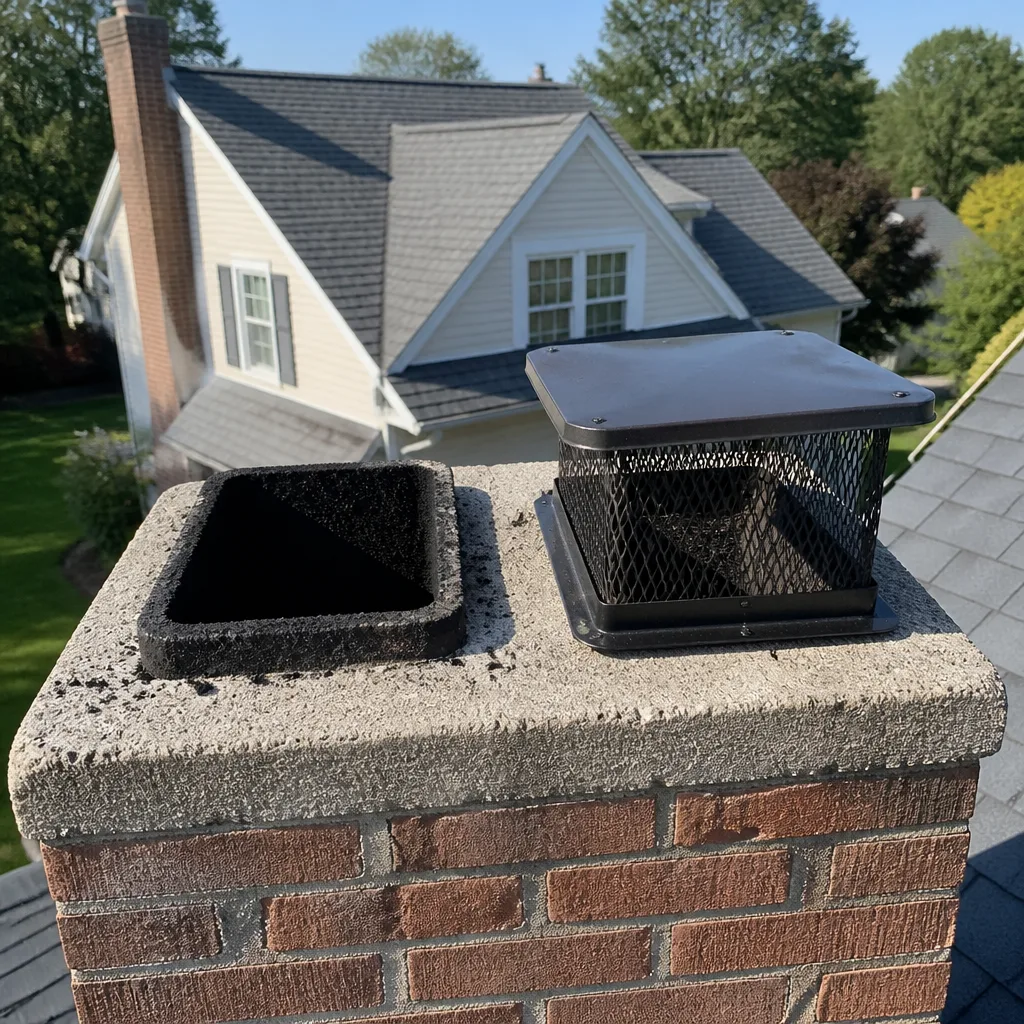 Sweep & inspection
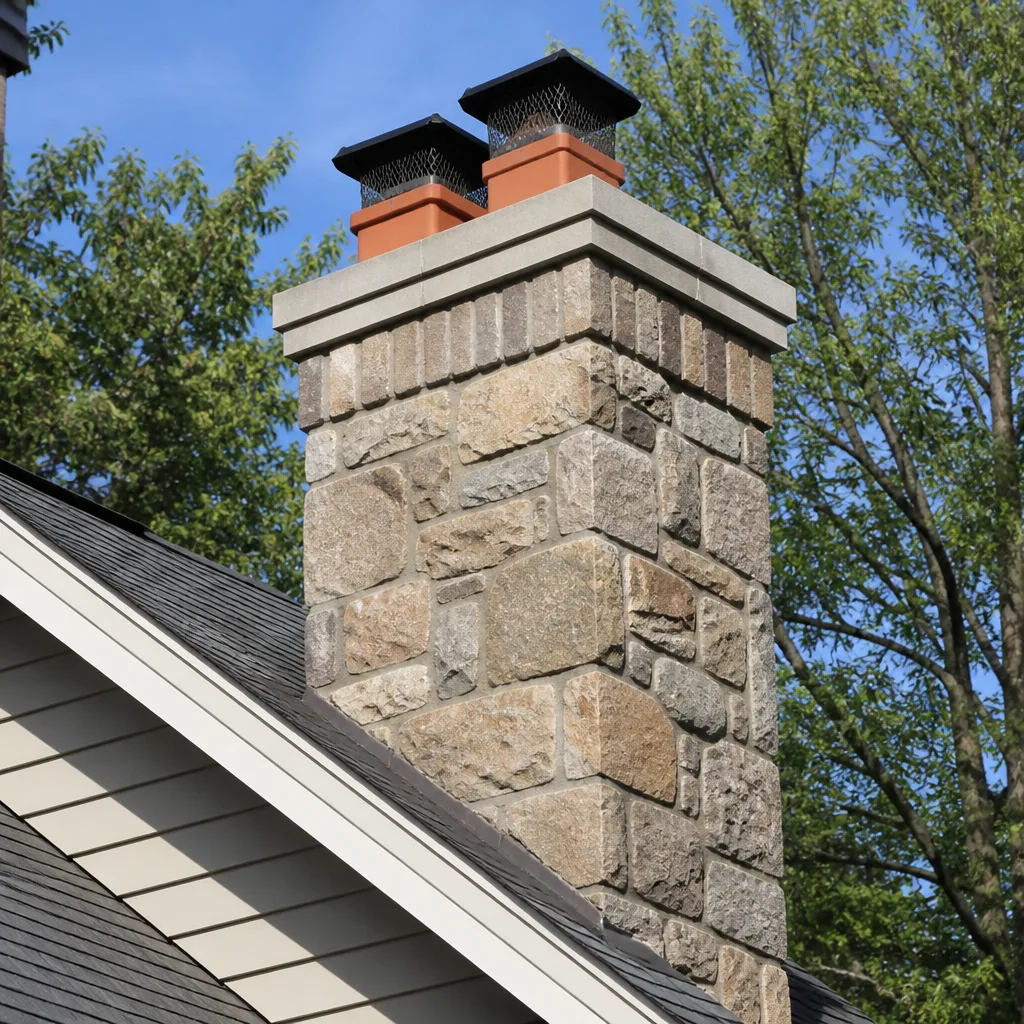 Caps & crowns
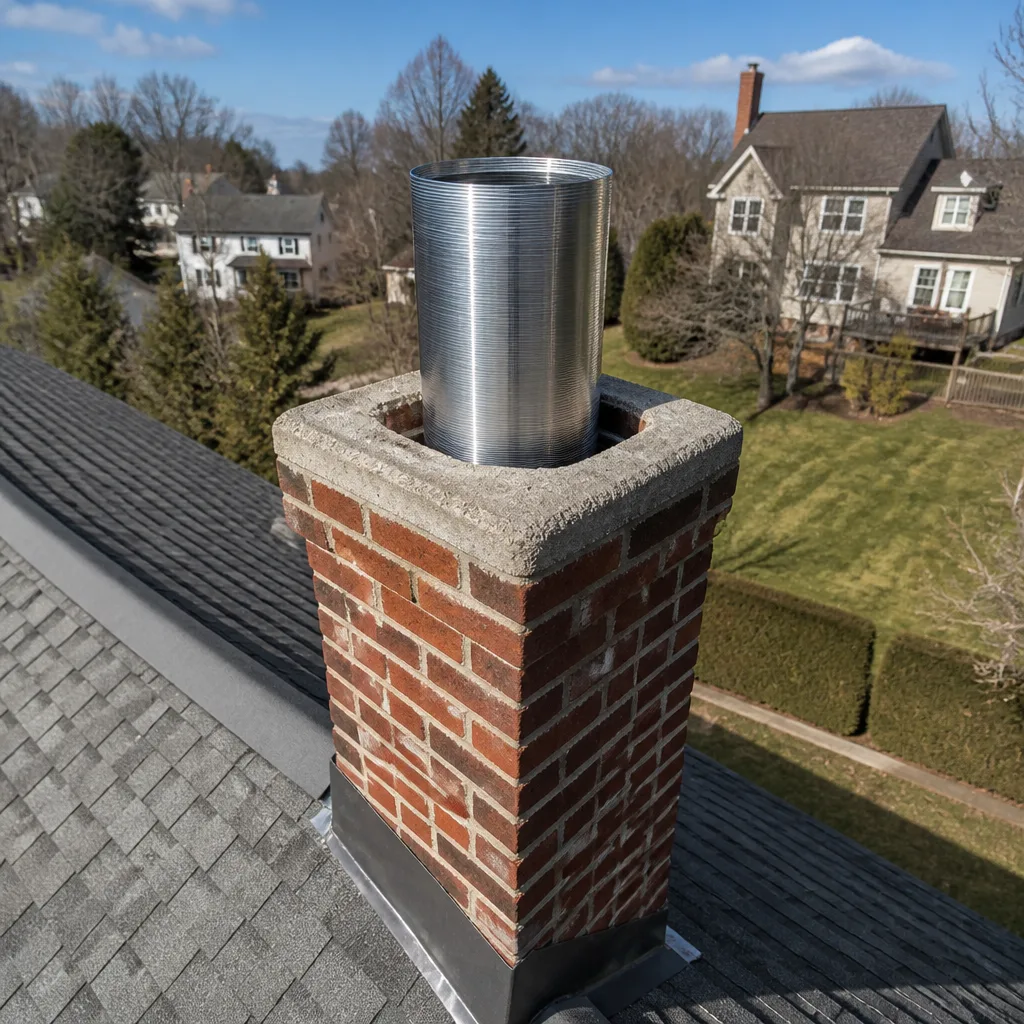 Flue relining
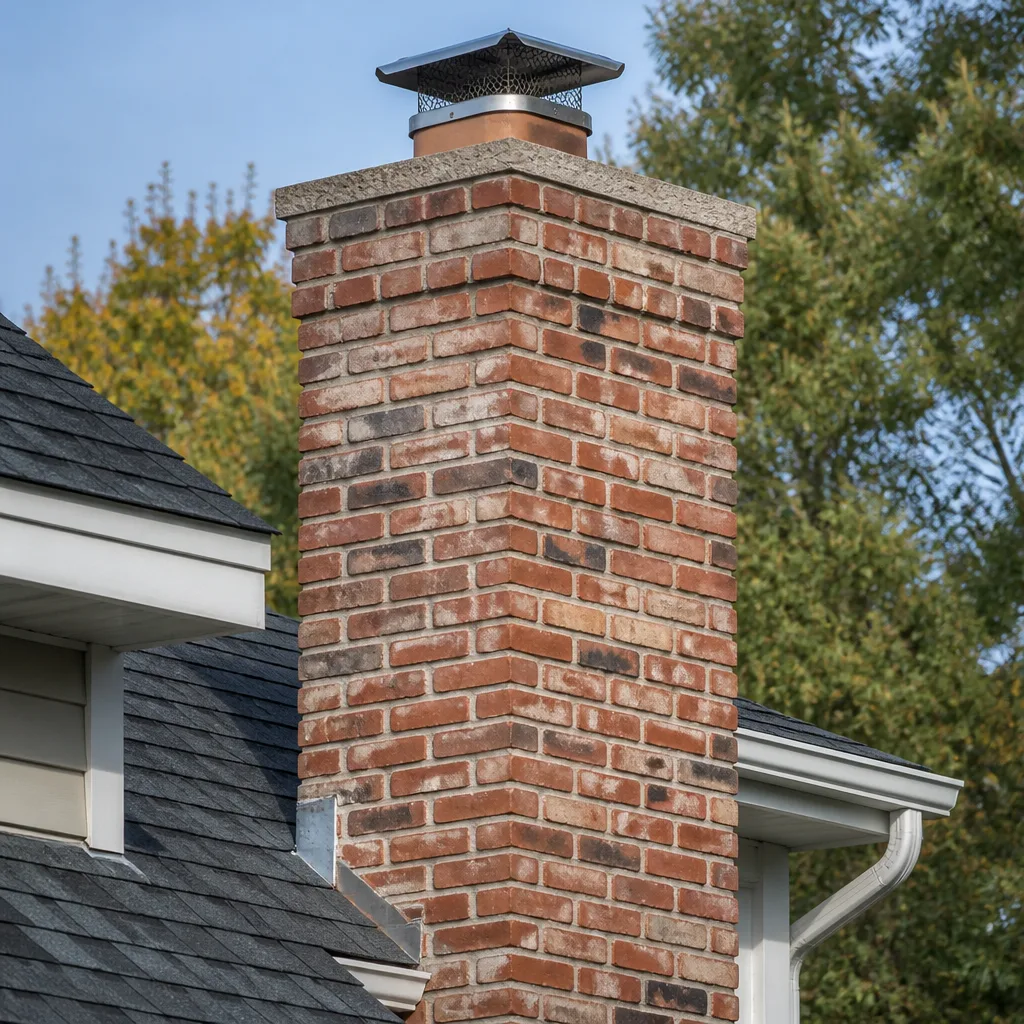 Masonry repair
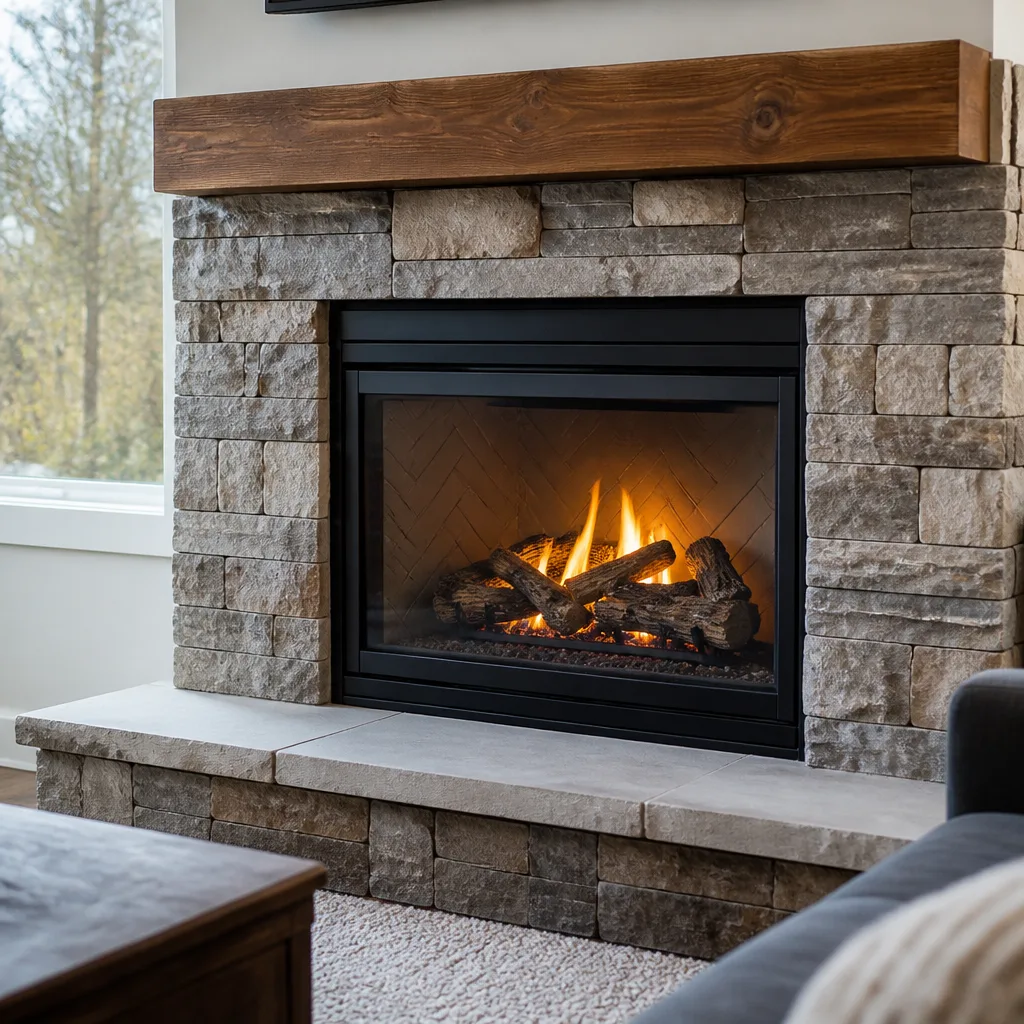 Gas fireplace service
Level 1 sweep and inspection to the NFPA 211 annual standard - flue, crown, cap, and flashing checked and photographed
Chimney sweep logs do not sweep chimneys. They loosen some creosote - which then falls where a brush and vacuum still have to collect it.
The Complete Guide to Chimney Cleaning in Wakefield
Most homeowners schedule a chimney sweep and assume they’re covered. What they’re actually getting, without knowing it, is a visual pass on a system that can fail in four distinct ways, only one of which involves creosote. The other three – a cracked liner, a failing crown, a smoke chamber that never gets cleaned – quietly get worse between visits. Wakefield’s climate makes this worse than in many places: humid summers soften mortar and let moisture sit against clay tile for months, then a wood-burning season works the whole assembly hard. This guide walks through what a real cleaning involves, how the three NFPA 211 inspection levels differ, why clay liners matter so much in older Wakefield homes, and how to read your sweep report so you know what’s urgent and what can wait.
Quick Answer
Chimney cleaning in Wakefield is more than a sweep. A proper service checks the flue, liner, smoke chamber, firebox, damper, crown, and cap, and includes an inspection to the appropriate NFPA 211 level. If all you’re getting is a brush down the flue with no report, you’re seeing roughly one quarter of what can actually go wrong.
Styles & brands we work with
- Sweep & inspection
- Caps & crowns
- Flue relining
- Masonry repair
- Gas fireplace service
Table of Contents
- Why Chimney Cleaning Looks Different in Wakefield
- Level 1, Level 2, and Level 3 Inspections: When Each Is Required
- What a Full-System Sweep Actually Covers
- Clay Tile Liners: The First Thing to Check, the Last Thing You’ll Hear About
- How to Read Your Sweep Report
- Creosote, Moisture, and the Two Problems That Compound
- How Often Should You Schedule a Cleaning?
- What Chimney Cleaning Costs in Wakefield
Why Chimney Cleaning Looks Different in Wakefield
Wakefield sits in a part of North Carolina where four distinct seasons are real, wood-burning happens in earnest from late fall into early spring, and summers run humid for months on end. That combination produces a creosote and moisture damage pattern you won’t find in a dry mountain town or a coastal one. The house heats up, cools down, and dries slowly, and the chimney takes the brunt of it.
Here’s the mechanism. During the humid months, moisture in the air migrates into the masonry and the clay liner. Mortar joints that were reasonably sound in October can soften by August. Then wood-burning season starts, the flue heats unevenly, and the clay tiles expand at a different rate than the surrounding brick. Hairline cracks that would have held in a dry climate widen. The creosote that forms on top of a compromised liner is only half the story – the other half is what the moisture did to the liner itself.
This matters for how often Wakefield homeowners should book a check. In dryer climates, the standard advice of an annual inspection still applies. Here, the annual inspection really is the baseline and not just a sales pitch. If you burn heavily – say, several cords a year – the flue may need to be swept more often than once a season.
- Two enemy seasons, not one. Summer humidity attacks mortar and liner; winter burning deposits creosote. Both matter.
- Wide temperature swings. Fall and spring here flip between warm and cold fast. Every cycle stresses the masonry.
- Mixed fuel use. Many Wakefield homes burn wood in the main fireplace and run gas in a secondary one, so you’re managing two different maintenance profiles.
- Older housing stock. A lot of Wakefield homes were built with clay tile liners that are now at the age where cracking shows up.
The practical takeaway: a Wakefield chimney is inspected for both creosote and moisture damage, every year. Skipping one season gets expensive in a way it doesn’t in a drier climate.
Level 1, Level 2, and Level 3 Inspections: When Each Is Required
NFPA 211, the national standard for chimneys, fireplaces, vents, and solid fuel-burning appliances, defines three inspection levels. Most homeowners have heard of none of them. That’s fine until you’re the one being told you need a Level 2 and you’re wondering what you paid for the first time around.
A Level 1 inspection covers the readily accessible portions of the chimney and venting: what can be seen without tools to open up the structure. It’s the standard for a chimney that’s been in continuous service and hasn’t changed. A Level 2 goes further, including a video scan of the flue interior, access to concealed portions of the chimney, and inspection of the attic, crawlspace, and any accessible areas around the chimney. It’s required when a chimney changes use (say, switching from oil to wood or adding an insert), after an event like a chimney fire or a building fire, or when a property changes hands. A Level 3 inspection is the most invasive – it’s used when a Level 2 finds a problem that can’t be diagnosed without opening up part of the chimney, and it usually involves removing part of the crown, the wall, or the chimney itself.
- Level 1: Visual, accessible portions only. Standard for routine, unchanged, in-service chimneys.
- Level 2: Level 1 plus video scan of the flue interior and accessible concealed areas. Required after a change in use, a chimney fire, a property transfer, or a major change to the appliance.
- Level 3: The most thorough. Performed when a Level 2 identifies a problem that can’t be diagnosed without opening up concealed parts of the structure.
Here in Wakefield, Level 2 inspections come up most often when a homeowner installs a new wood stove insert, when a house has been bought in the last year, or when there’s a reason to suspect the flue interior is damaged. If you’ve had a chimney fire – even a small one that got put out quickly – the standard says Level 2. Ask your inspector which level they’re performing before the work starts.
What a Full-System Sweep Actually Covers
A chimney is not a pipe. It’s an assembly of at least seven components that each fail differently, and a proper cleaning touches every one of them. If a sweep brushes the flue and hands you a bill, that’s not a full-system sweep – it’s a single-component one.
Here’s what we check every time we do a chimney sweep in a Wakefield home:
- Flue. Brushed to remove creosote from the walls of the flue. This is the obvious part.
- Liner. Inspected for cracks, gaps, and separation. In older homes this is where the real problems show up.
- Smoke chamber. Often the dirtiest part of the system and the most skipped. Creosote builds up on the shelf and slopes, and it doesn’t get touched by a flue brush. If nobody’s been in there, it’s loaded.
- Firebox. Checked for cracked brick, deteriorated mortar joints, and gaps at the ash dump.
- Damper. Tested for full opening and closing, and checked for rust or warping that affects the seal.
- Crown. Inspected for cracks, spalling, and separation from the flue. The crown sheds water from the chimney top – when it fails, everything below it takes water.
- Cap. Checked for condition and fit. A missing or damaged cap lets rain and animals straight into the flue.
Roof-level components like the crown and cap are where a lot of general handymen stop. That’s not a criticism so much as a warning. Crown repair and chimney cap & crown work done with hardware-store materials won’t survive a humid Wakefield summer. We install products from DuraFlex and Copperfield because they hold up in conditions that commodity parts don’t. It’s the same trade-grade approach we bring to the firebox and damper – if the damper needs rebuilding or the firebox has lost mortar, that’s fireplace repair and it belongs to the same visit, not a referral.
One inspection. One company. Every repair handled in-house. That’s the model, and it’s the reason we can tell you what your chimney needs and resolve it without the handoff.
Clay Tile Liners: The First Thing to Check, the Last Thing You’ll Hear About
If your Wakefield home is more than a few decades old, it almost certainly has a clay tile liner. Clay tile is a perfectly good liner material – when it’s sound. The problem is that it’s brittle, it’s installed in segmented lengths with mortar joints between them, and it doesn’t handle thermal cycling or moisture the way modern stainless systems do. Those mortar joints are the weak point. When they fail, combustion gases can leak into the surrounding masonry, and the flue interior is no longer gas-tight.
Here’s where we see the biggest gap between what a sweep should tell you and what most will: too many sweeps brush the visible flue and never put a camera up top. Without a video scan, they can’t see tile separation, spalling, or joint failure in the upper flue. So the report comes back clean, and the homeowner assumes the liner is fine. It might not be.
The good news is that a failing clay tile doesn’t always mean a full reline. HeatShield resurfacing can restore a deteriorating flue interior in place – the system smooths out the damaged clay, fills the joints, and creates a new sealed surface without pulling the old liner out. It’s a repair option many sweep companies just can’t offer, because they don’t stock or install the product. For flues with offset paths or complex geometry that can’t take a rigid liner, DuraFlex systems are our answer – flexible enough to work where rigid liner installers have to turn the job down.
- Check first: every clay liner gets a video scan during inspection.
- Resurface if possible: HeatShield restores the flue interior without a full reline.
- Reline if necessary: DuraFlex flexible liners handle offsets and complex paths a rigid liner won’t.
- Don’t skip: if you’re told the liner is fine but no camera went up the flue, ask why.
Clay tile is the first thing we check in an older Wakefield home, and we think it should be the first thing every sweep mentions. If yours doesn’t bring it up, ask.
How to Read Your Sweep Report
The single most useful skill a homeowner can develop is reading an inspection report critically. Not suspiciously – critically. A good report tells you what’s fine, what needs watching, and what’s a real safety problem. A thin one just says “sweep complete” and lets you assume everything’s fine.
Here’s how we’d categorize findings if you were reading ours:
- Fine: Component observed, in good condition, no action. You should see these explicitly listed – the report should show its work, not just its concerns.
- Watch: Component shows early signs of wear. No immediate risk, but note it and check again at the next inspection. Example: light crazing on the crown.
- Recommend: Component should be repaired before significantly more burning. Example: a damper that no longer seals completely. Not urgent for safety, but you’ll lose efficiency and it will get worse.
- Immediate safety concern: Do not use the fireplace until the issue is resolved. Examples: cracked flue tile with visible separation, a failed crown that’s allowing water into the chimney structure, a collapsed smoke chamber.
The most common misreading is treating “recommend” as “urgent.” It isn’t. A crown with light crazing can wait a season if you watch it. What you should never do is let a “recommend” turn into an “immediate” because you ignored it for two years. Equally common is treating an “immediate” as “nice to know.” Don’t. If you see the words “do not use,” that’s the report doing its job.
Ask your inspector to walk you through every line. Any sweep worth the visit should be able to explain, in plain language, exactly what they saw and why it lands where it does. If they can’t, they’re guessing.
If you’re buying a home in Wakefield and the seller hands you a sweep report, read it against these four categories. If it doesn’t distinguish between “recommend” and “immediate,” get a second opinion before closing.
Creosote, Moisture, and the Two Problems That Compound
Creosote is the tar-like byproduct of incomplete combustion that coats the inside of the flue. It comes in three grades: light soot (brushes off), the crusty middle stage (needs a rotary brush), and the glazed, hardened stage (needs chemical treatment or aggressive rotary action). Every stage of creosote is flammable at the higher temperatures a hot fire produces, and glazed creosote is the stuff that causes chimney fires. That’s the one thing every homeowner knows about chimneys.
What fewer know is that moisture is the multiplier. Wet masonry and wet creosote go together. Water in the flue from a failed crown or a missing cap creates an environment where creosote adheres more aggressively and where mortar joints deteriorate faster. It’s a compounding problem: a small crown crack lets water in, the water softens the mortar, the softened mortar lets more water in, and the creosote that builds up on the wet surface is harder to remove and more damaging when it burns.
In Wakefield, this plays out in a specific way. A dry climate can tolerate a cracked crown for years without cascading effects. A humid one can’t. That’s why we treat a failed crown as a real problem and not a cosmetic one.
- Grade 1 creosote: light soot, brushes off easily.
- Grade 2 creosote: crusty, flaky, needs a rotary brush.
- Grade 3 creosote: glazed and hardened, the fire-risk grade, needs chemical treatment or aggressive mechanical action.
We install Gelco and Olympia Chimney products for caps and crown work specifically because they’re specified to handle weather exposure in humid regions. Those aren’t the parts you’d pull off a hardware-store shelf. They’re the parts the trade specifies. Getting that right the first time is what breaks the rain-creosote cycle instead of feeding it.
How Often Should You Schedule a Cleaning?
The national standard, NFPA 211, is an annual inspection. The sweep frequency depends on what the inspection finds. That’s the honest answer. Any sweep telling you a specific number of years between cleanings, without looking at your chimney, is guessing.
Here’s how we think about it in Wakefield specifically:
- Annual inspection for every chimney, active or not. This is the minimum. A chimney you haven’t burned in for a year can still have moisture damage or animal intrusion.
- Sweep after each cord of wood burned as a general rule of thumb, or when soot reaches roughly an eighth of an inch on the flue walls. Heavier burners need more frequent sweeps.
- Sweep after a chimney fire, even a small one you put out yourself. The fire can crack the liner or damage joints in ways you can’t see from the firebox. That calls for a Level 2.
- Sweep after a change in what you’re burning. New stove, new insert, switch from gas to wood – a Level 2 inspection and follow-up sweep if needed.
- Sweep before a new buying season if you’ve just closed on a Wakefield home. You don’t know the previous owner’s burning habits.
The system-check mindset has a practical consequence: it’s cheaper to inspect annually and sweep only when the inspection calls for it than it is to skip inspections and find a liner problem three years later. The inspection tells you what’s actually there. The sweep frequency follows from that.
What Chimney Cleaning Costs in Wakefield
We don’t quote prices in a guide like this because the right number depends on what we find when we open up the chimney. A standard sweep on a healthy flue is one job. The same sweep on a chimney with a damaged clay liner, a filled-up smoke chamber, and a crown that’s letting water in is a different job entirely, even if the homeowner called for the same thing. Pricing per job, set by a written estimate after the inspection, is the only honest way to do it. Nothing hidden, nothing added later. The number you agree to before booking is the number you pay.
One thing worth flagging for Wakefield homeowners: the temptation to book the cheapest sweep you can find is real, and it almost always costs more in the long run. A cheap sweep brushes the visible flue, hands over a receipt, and doesn’t put a camera up top. Six months later you’re calling a real chimney company for a liner inspection that would have been part of the original visit. That’s not a savings. That’s a deferred cost with worse interest than a credit card.
If you’re weighing repair options – HeatShield resurfacing, a DuraFlex reline, cap and crown work, or a firebox rebuild – ask for the written estimate in ranges and ask what happens if you wait a season. Any honest company will tell you which repairs can safely wait and which can’t. We will.
Common Mistakes to Avoid
- Booking a sweep with no inspection attached. A brush-only visit checks the flue and skips the smoke chamber, crown, cap, firebox, and liner. That’s roughly one component out of seven.
- Accepting a “clean” report without a video scan. In a Wakefield home with clay tile, the liner is the most likely point of failure and the last thing most sweeps look at. If a camera never went up the flue, the report isn’t complete.
- Letting a crown crack ride through the humid season. A cracked crown here means water in the chimney from June to September. The damage compounds while the weather is doing the damage.
- Choosing a sweep by price alone. Cheaper usually means less time and less scope. You’re not buying a brushing. You’re buying an assessment of a fire-safety system.
- Skipping the inspection in years you don’t burn much. Chimneys degrade without fires, especially in a humid climate. A dormant chimney still needs looking at.
- Hiring a generalist who “does chimneys on the side.” Cap and crown work, liner repair, and fireplace repair are specialist trades. Generalist handymen patch; chimney companies diagnose and resolve.
- Treating “recommend” as “urgent” or “ignore.” Both misreadings cost money – the first in unnecessary work, the second in deferred repairs that turn into structural problems.
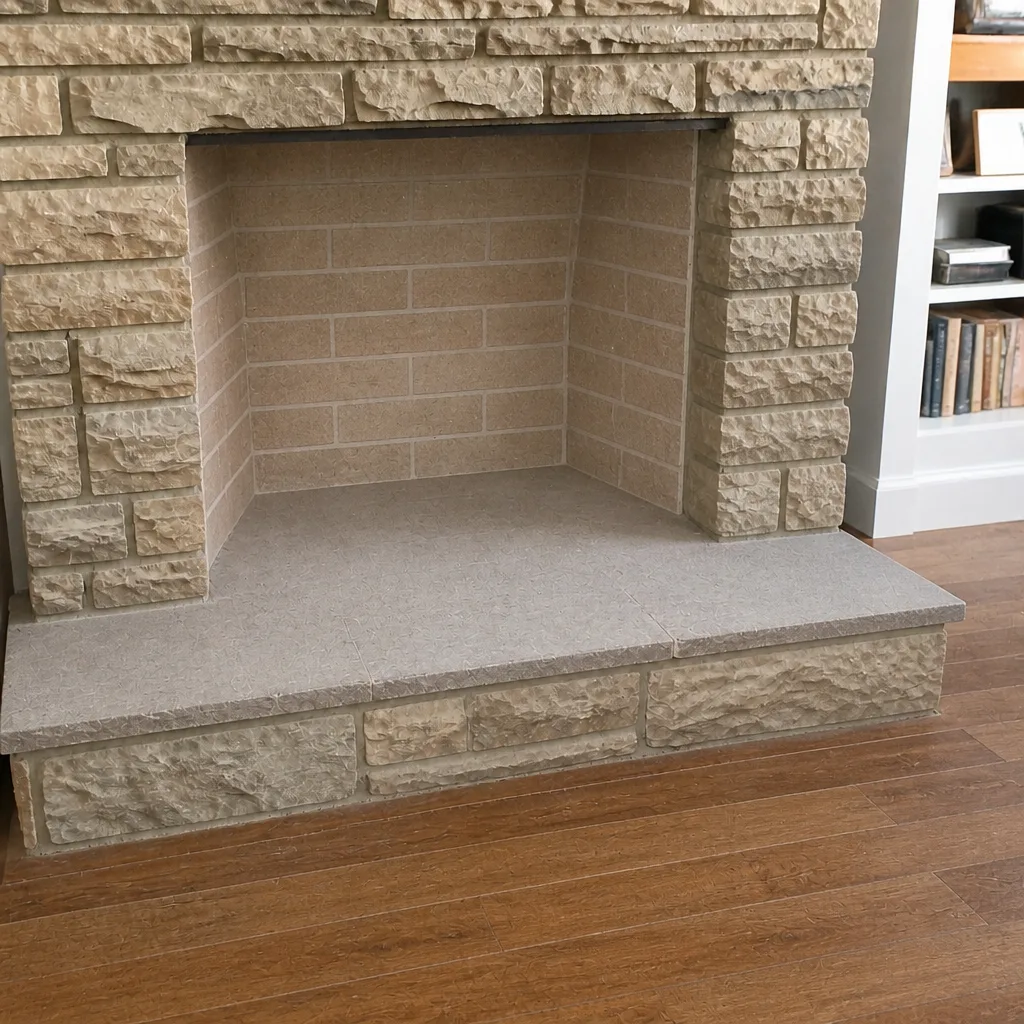
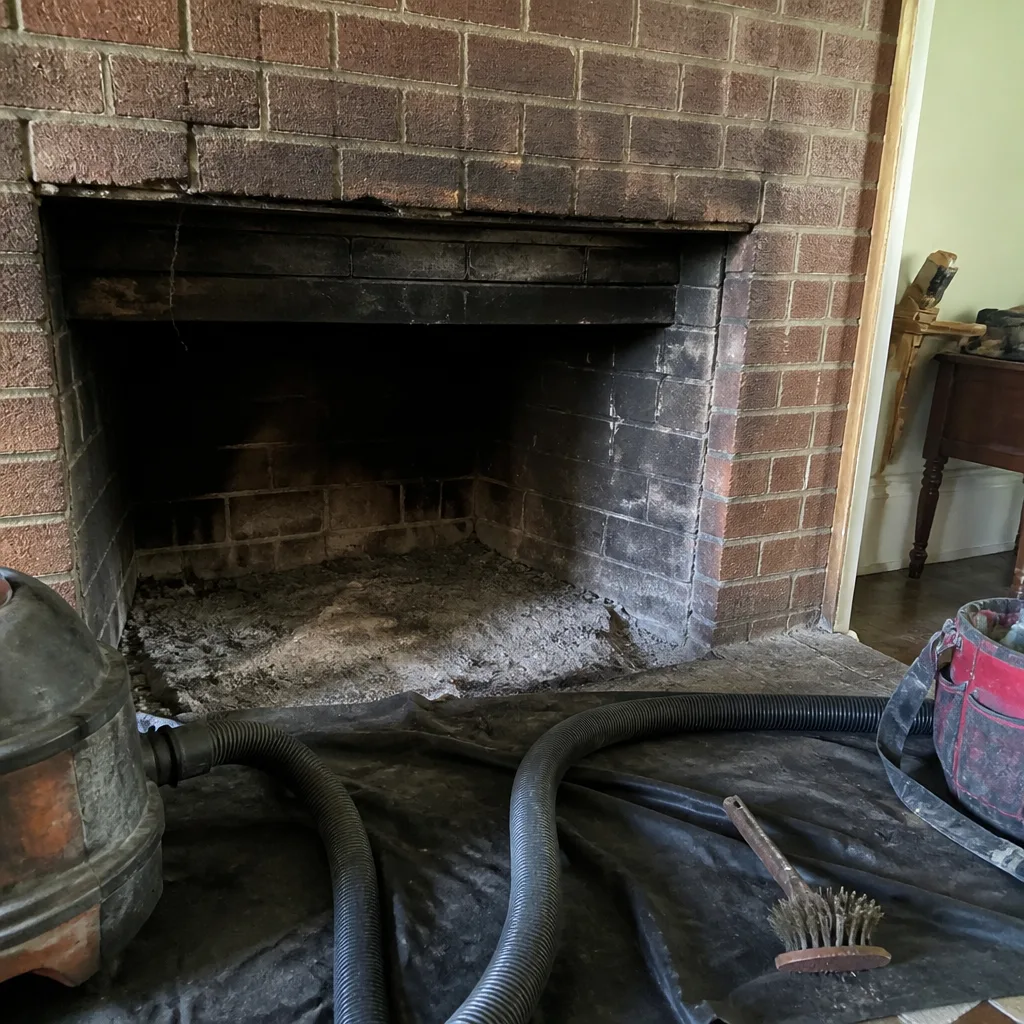
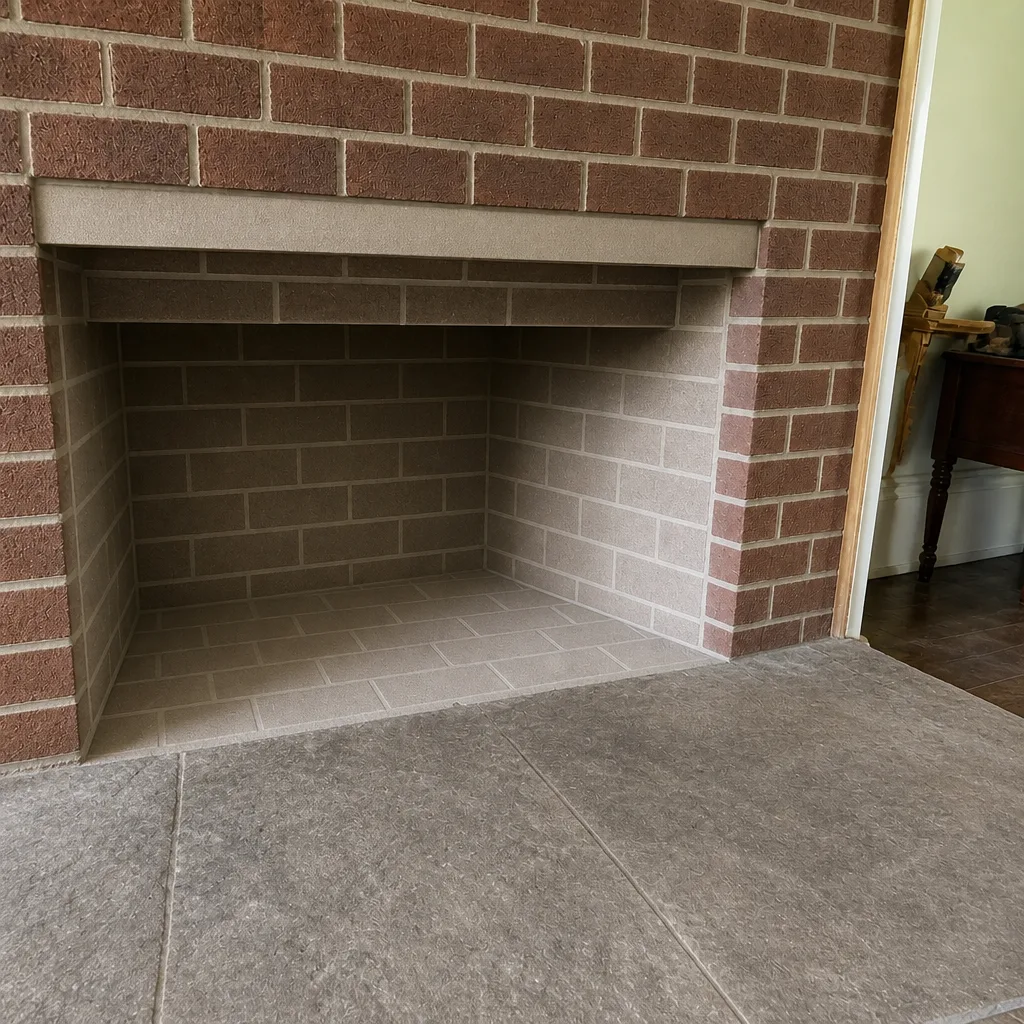
See the difference
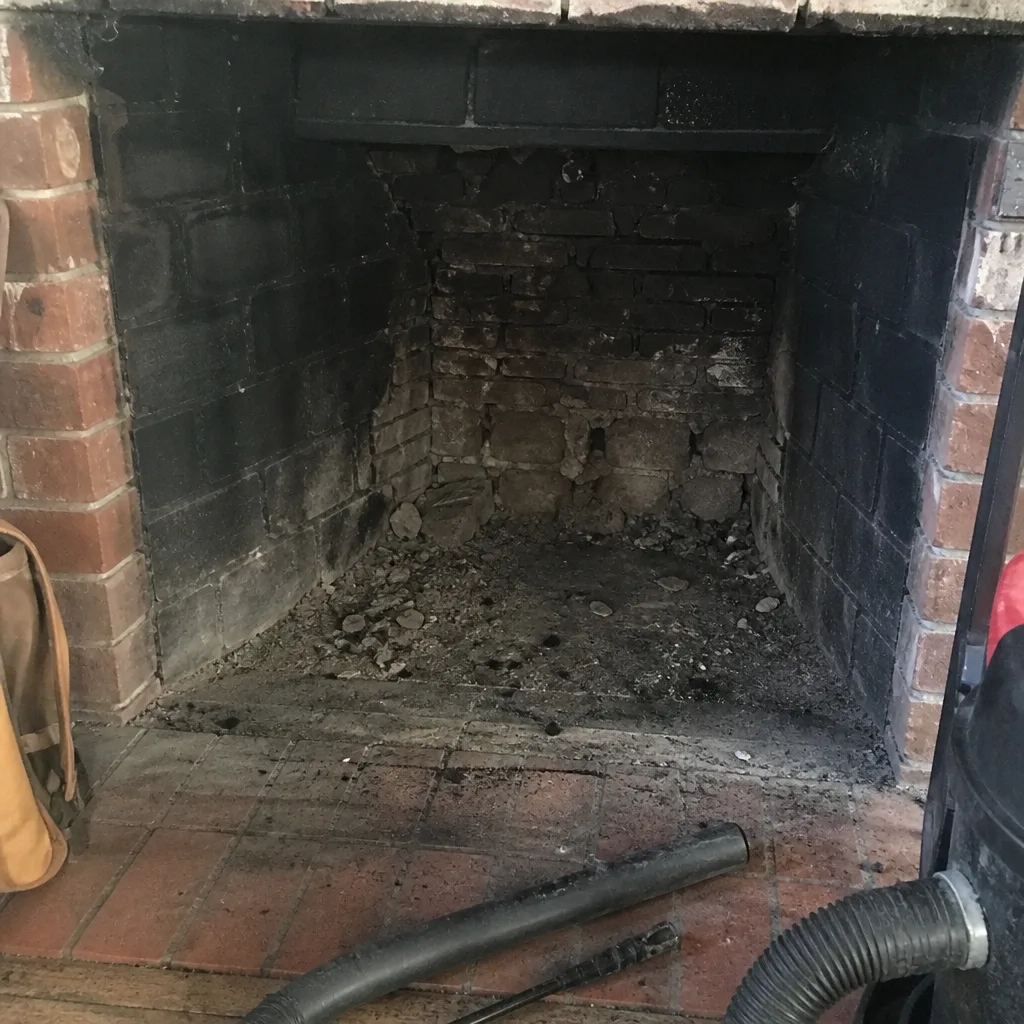 Before
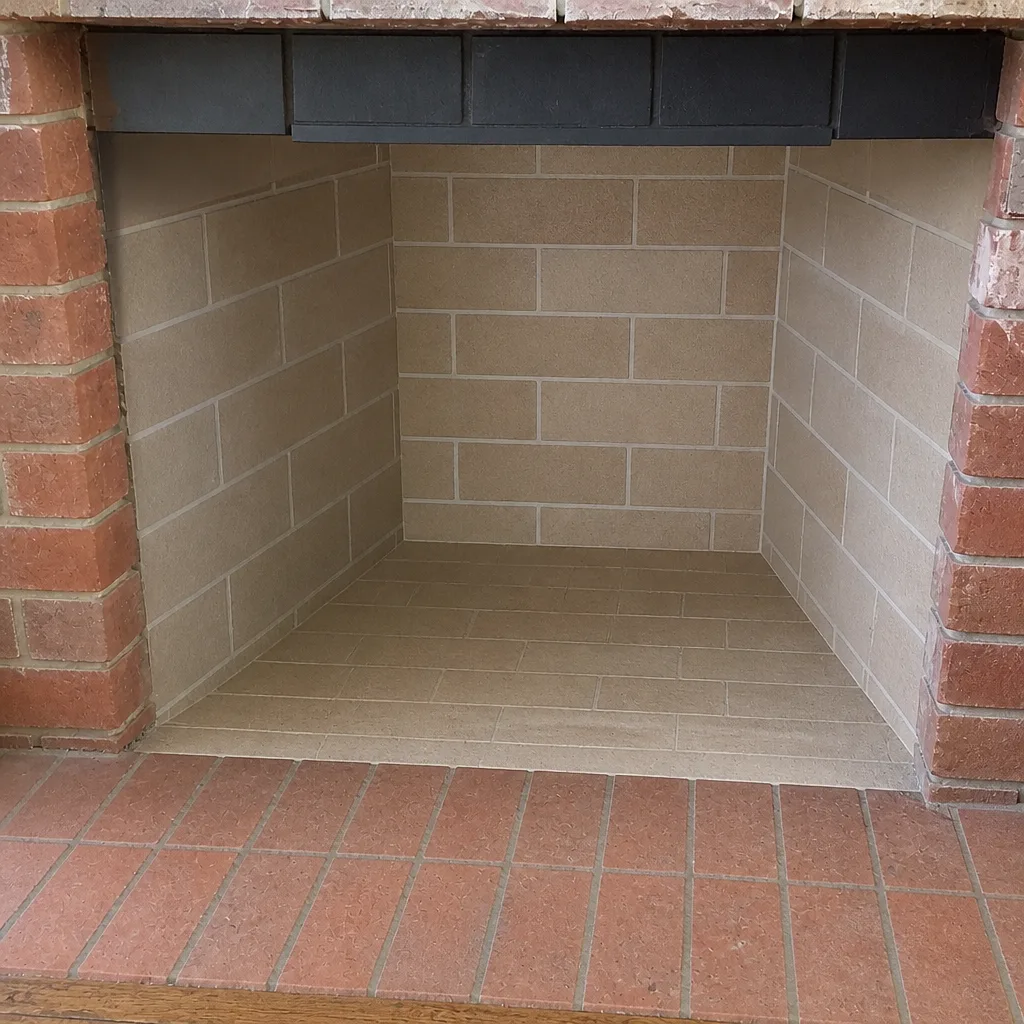 After
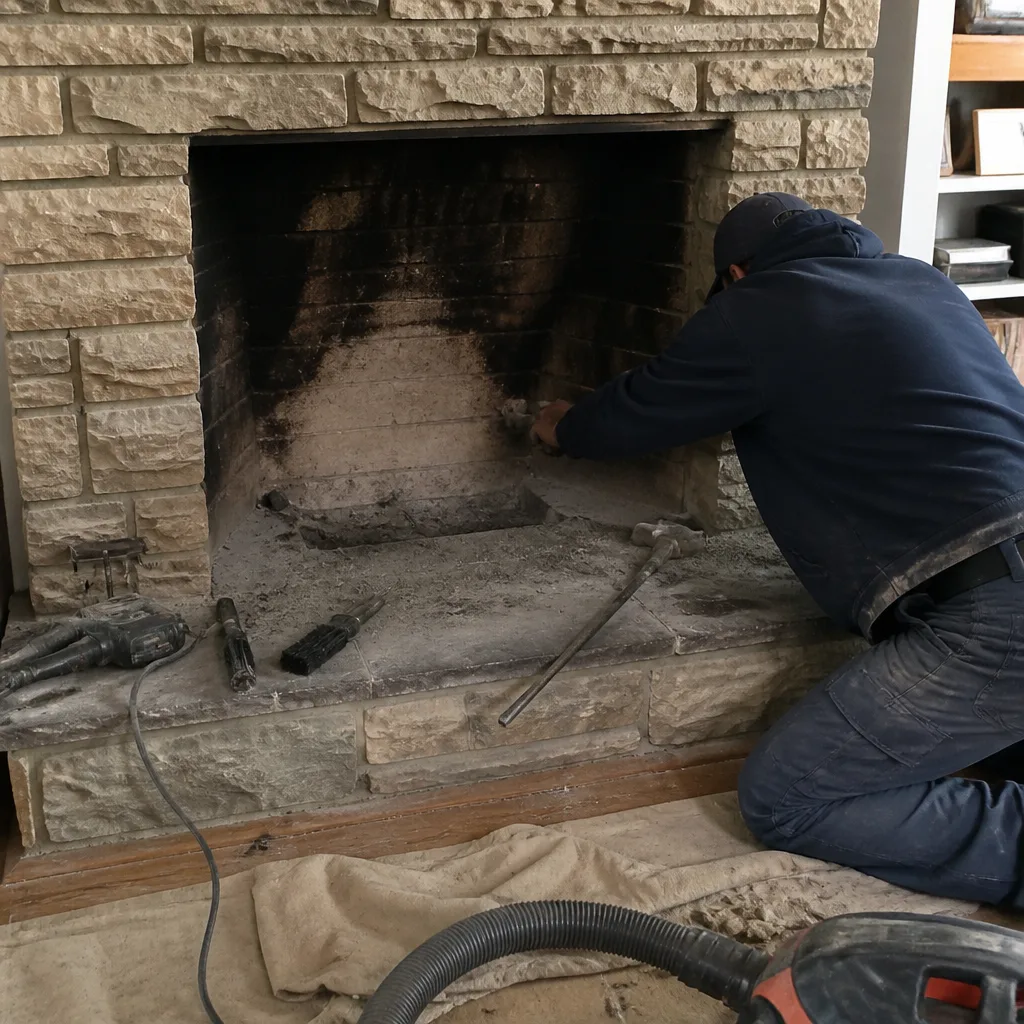 Before
 After
 Before
 After
When to Call a Professional
Some chimney issues are obviously a job for a trained eye, and some are more subtle. Call a professional if you’ve had a chimney fire, if you’re seeing smoke coming into the room rather than up the flue, if the fire burns poorly and you can’t figure out why, if you see cracked or missing clay tile from the top, if the crown has visible cracks or separation, if the firebox brick is spalling or the mortar is missing, or if a house you’re considering buying has a chimney with no recent inspection. The same goes for a gas fireplace that’s showing any sign of venting problems – that’s a safety issue and it should be looked at soon. Our technicians have up to 14 years of experience, and we work on the whole system, not a single component.
Wakefield Chimney Sweep Co offers free estimates in Wakefield – call (833) 513-8375. We answer 24/7. Fast dispatch from 7am to 7pm, Sunday through Friday.
Frequently Asked Questions
Cost depends on the chimney’s condition and what the inspection finds, and we set every price per job with a written estimate agreed before we book. A clean flue is a straightforward job; a chimney with a failed liner, a full smoke chamber, and a damaged crown is not, and it shouldn’t be priced as if it were. Call (833) 513-8375 for an exact quote – estimates are free.
You need a new liner or a resurfacing when a video inspection shows cracked flue tile, separated joints, or a flue that’s no longer gas-tight. You don’t need one on the word of a sweep who never put a camera up the flue. Ask to see the footage. That’s the whole check. If the video shows a damaged liner, HeatShield resurfacing can often fix it without replacement, and if the flue paths are offset or unusual, DuraFlex flexible liner systems are what we install. Call (833) 513-8375 – we’ll show you the evidence before recommending anything.
Inspected annually, swept when the inspection calls for it. For most Wakefield homeowners that’s a sweep every season or two depending on how much wood you burn. The variables that push frequency up are: burning more than a cord a year, a history of chimney fires (even small ones), and any sign of moisture getting into the flue. Call (833) 513-8375 to book an inspection and get a real answer based on your chimney.
Two things build up quietly. Creosote accumulates in the flue and the smoke chamber, and at Grade 3 (glazed) it’s the direct fuel for a chimney fire. Moisture damage in the masonry and clay liner gets worse, not better, and a small crown crack becomes a structural repair. Neither problem announces itself until it’s expensive. Call (833) 513-8375 and get an inspection booked before the next burning season.
Yes – older Wakefield homes with clay tile are exactly who we work with most often, because the clay liner is the component that fails first and gets looked at last. Every clay liner gets a video scan as part of the inspection. We install and service HeatShield, DuraFlex, Copperfield, Olympia Chimney, Famco, and Gelco products, so we can resurface or reline the flue based on what the footage shows. Call (833) 513-8375 to book an inspection.
Usually, yes. Our five service areas (sweeping, inspection, cap and crown, fireplace repair, and chimney repair) are handled by the same company, so what the inspection finds gets resolved without a referral to another contractor. That’s what single-source accountability means in practice. Call (833) 513-8375. We answer 24/7. Fast dispatch from 7am to 7pm, Sunday through Friday.
The Bottom Line
Chimney cleaning in Wakefield is a system check, not a brushing. The four ways a chimney fails are creosote buildup, liner damage, moisture intrusion, and crown or cap failure, and only the first one gets looked at during a brush-only visit. Book an annual inspection to the right NFPA 211 level, insist on a video scan of any clay liner, read the report for the difference between “recommend” and “immediate safety concern,” and treat a cracked crown as a real problem rather than a cosmetic one. That’s how Wakefield homeowners prevent chimney fires instead of discovering one.
Wakefield Chimney Sweep Co handles the whole system, from routine sweeps to full relines, with professional-trade materials from DuraFlex, HeatShield, Copperfield, and Olympia Chimney. One inspection, one company, every repair handled in-house. Call (833) 513-8375 for a free estimate. We answer 24/7. Fast dispatch from 7am to 7pm, Sunday through Friday. Learn more about our Wakefield Chimney Sweep Co service and the full-system approach we bring to every Wakefield home.
Written by the team at Wakefield Chimney Sweep Co.