
Last updated November 25, 2026
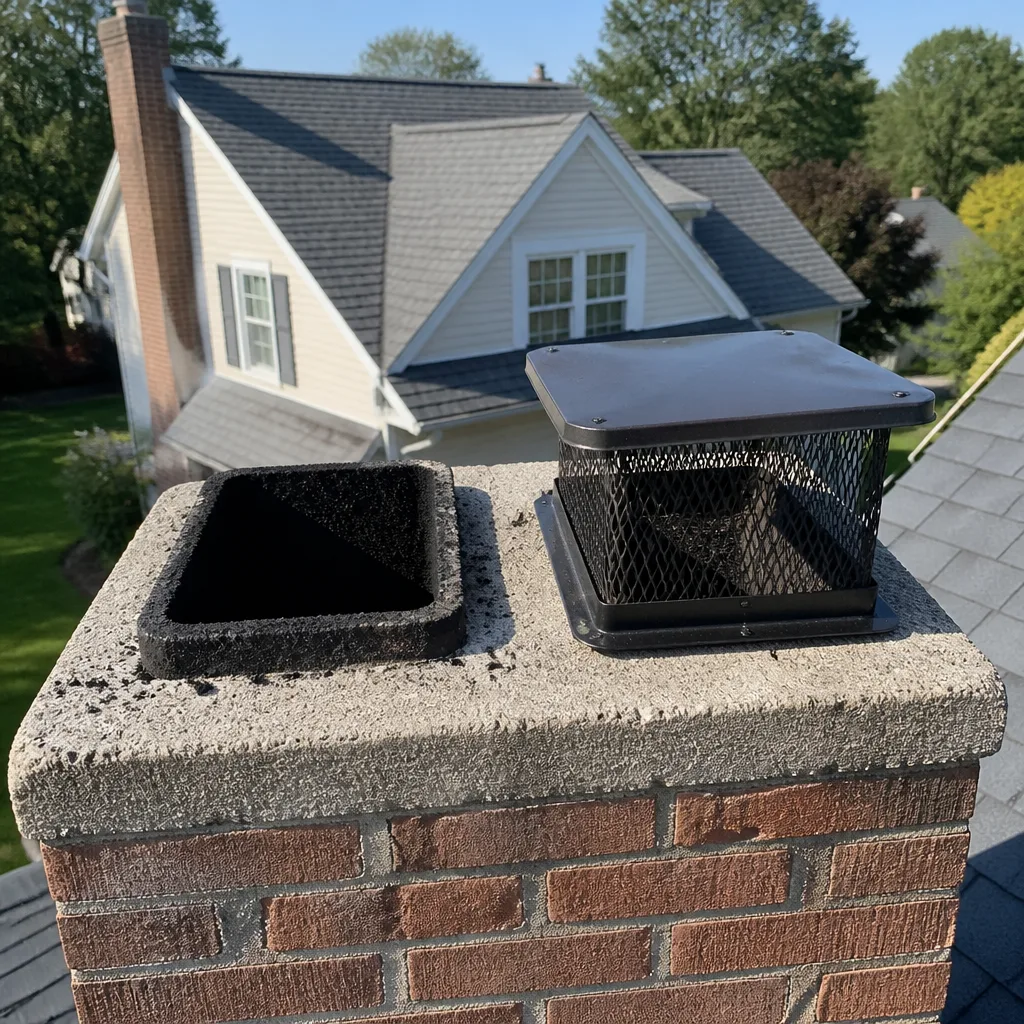 Sweep & inspection
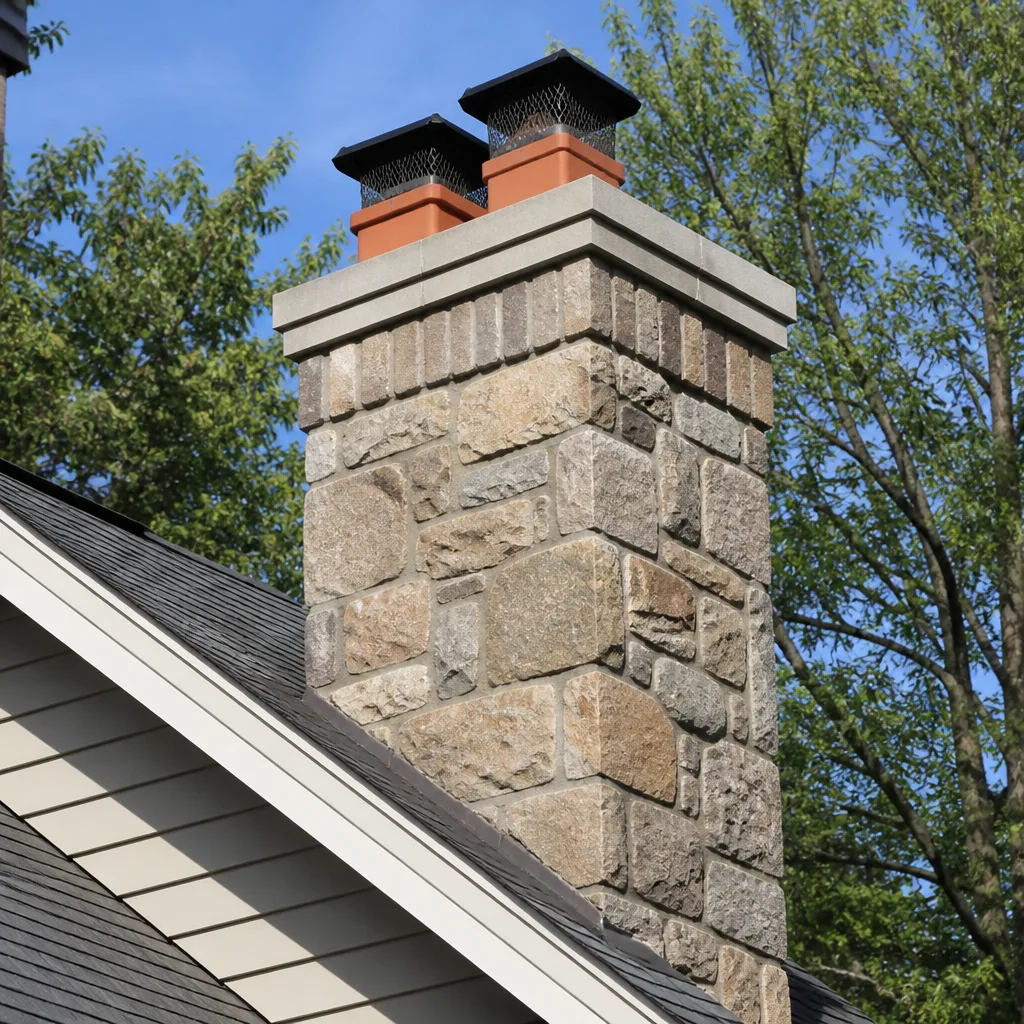 Caps & crowns
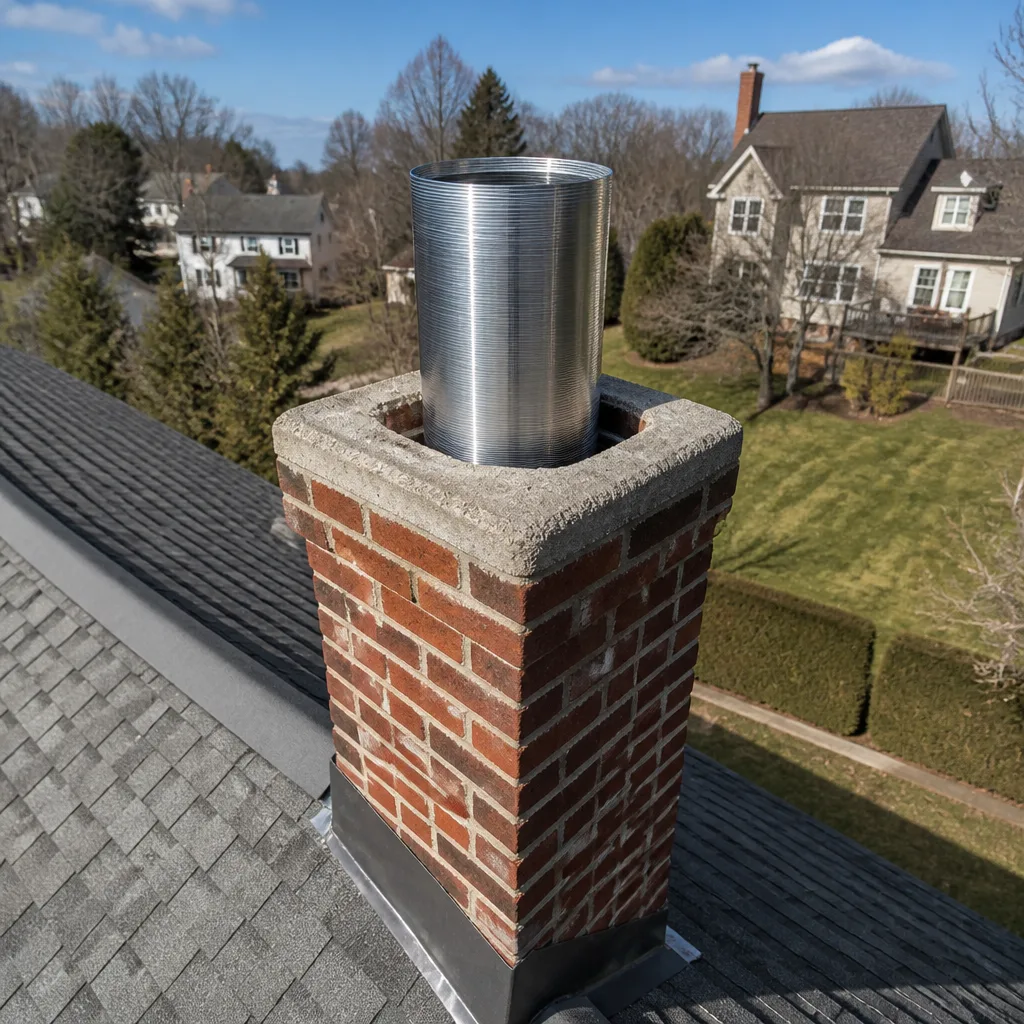 Flue relining
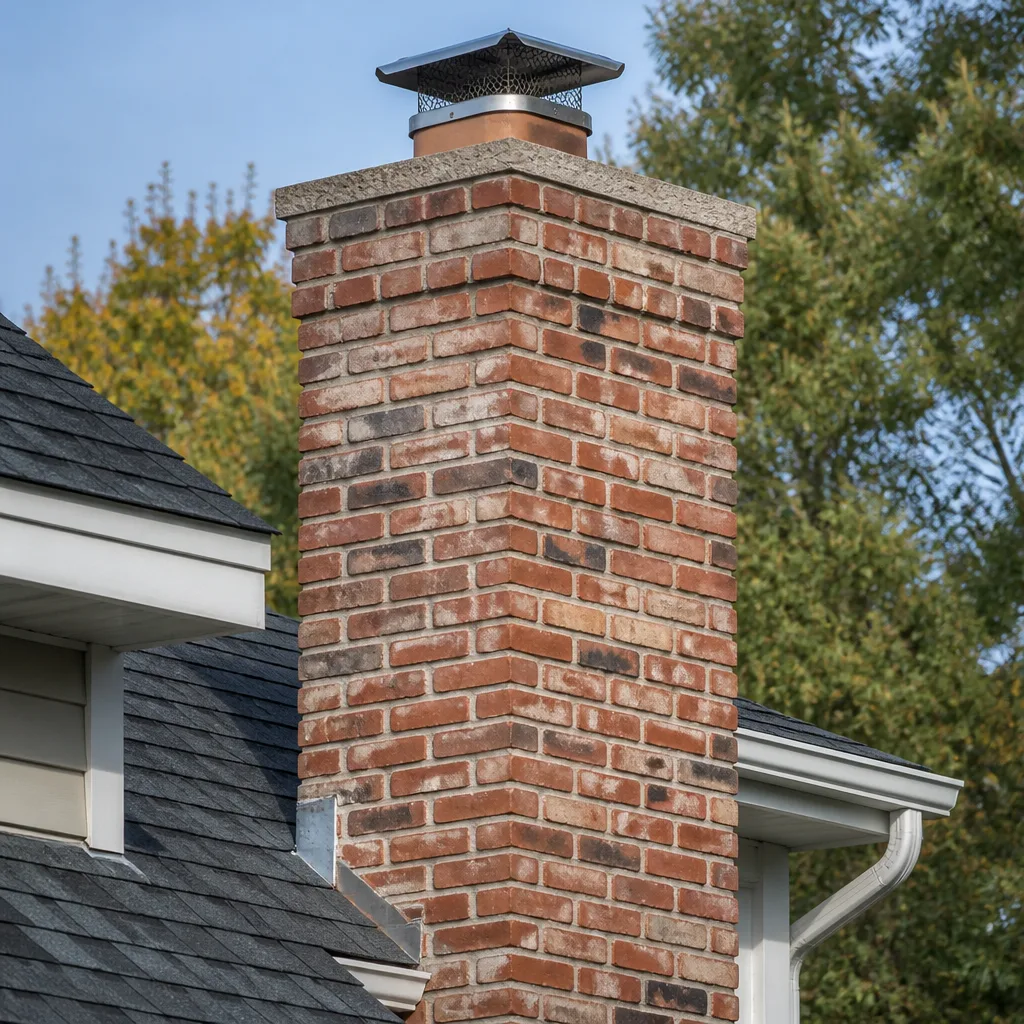 Masonry repair
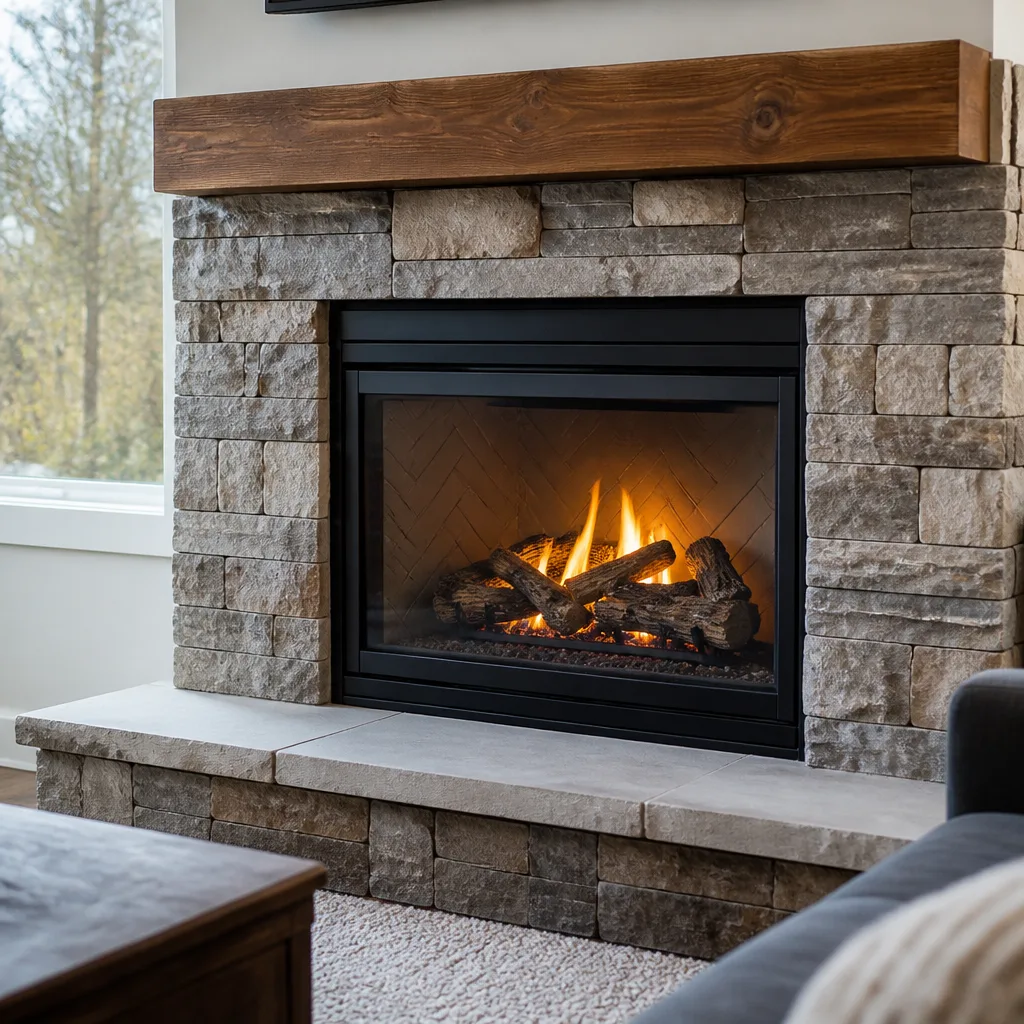 Gas fireplace service
Level 1 sweep and inspection to the NFPA 211 annual standard - flue, crown, cap, and flashing checked and photographed
Chimney sweep logs do not sweep chimneys. They loosen some creosote - which then falls where a brush and vacuum still have to collect it.
DIY vs Professional Chimney Cleaning: The Wakefield Homeowner’s Decision Guide
You can sweep your own chimney. That’s true, and we won’t pretend otherwise. The real question isn’t whether you’re capable of pushing a brush up a flue – it’s whether the thing you’re cleaning is a straight brick flue with a standard cap, or a stainless liner on a wood stove insert. Those are not the same job. The brush kit at the hardware store doesn’t know the difference, and it won’t tell you when it’s out of its depth. This guide walks through the specific chimney configurations where doing it yourself makes sense, the ones where it doesn’t regardless of your skill, and a three-question framework Wakefield homeowners can answer in about five minutes to land on the right call.
Styles & brands we work with
- Sweep & inspection
- Caps & crowns
- Flue relining
- Masonry repair
- Gas fireplace service
Quick Answer
DIY chimney sweeping is genuinely viable for a single-story home with a straight, unlined clay tile flue, no insert, moderate wood use, and safe roof access. It is not adequate for offset flues, stainless liners, wood stove inserts, oil appliances, or any system that hasn’t had a professional inspection in over three years. And no brush kit can assess liner integrity, mortar joints, the smoke chamber, or produce documentation your insurer will accept.
Table of Contents
- Why DIY Sweeping and Professional Sweeping Aren’t the Same Job
- The Configurations Where DIY Sweeping Actually Works
- The Configurations Where DIY Is Not Adequate, No Matter Your Skill
- What DIY Sweeping Cannot Do At All
- The Equipment Gap: What a Pro Brings That a Kit Doesn’t
- Three Questions That Decide It in Five Minutes
- What Wakefield Chimneys Specifically Deal With
- Common Mistakes to Avoid
- When to Call a Professional
- Frequently Asked Questions
- The Bottom Line
Why DIY Sweeping and Professional Sweeping Aren’t the Same Job
A chimney brush removes creosote from the flue walls. That’s it. That’s the entire function of the tool, and it does that one job well when the flue is a straight run of clay tile with nothing in the way. Most homeowners picture that flue when they picture their chimney. A good number of them are wrong about what’s actually up there.
Here’s the part that trips people up: a brush doesn’t know what it’s brushing. A poly brush on a straight clay flue scrapes glaze and soot down to the smoke shelf. The same brush run against a stainless liner flexes the wrong way, catches on seams, and can pull a liner connection loose without the person on the roof ever feeling it happen. Run it into an offset flue and it stops cold at the transition, leaving the upper flue untouched while the homeowner assumes it’s clean because brush strokes went in and dust came out.
The decision isn’t skill. It’s configuration. A homeowner who’s handy, careful, and patient can do a genuinely good sweep on the right chimney. A homeowner with every tool and every good intention cannot do an adequate sweep on the wrong one, because the limitation is what’s inside the flue, not what’s in their hands.
In our experience across Wakefield, the chimneys that get the most confident DIY attention are often the ones that most need a professional’s read – inserts, liners, and offset flues tend to look the simplest from the ground. The full-system approach at Wakefield Chimney Sweep Co exists because the sweep itself is the easy part; knowing what you’re sweeping and what condition it’s in is the work.
The Configurations Where DIY Sweeping Actually Works
There is a real, honest category of chimney where a homeowner can sweep safely and effectively. If your system matches every item on this list, DIY is a defensible choice. If it misses even one, the calculus changes.
- Single-story home. Roof access is manageable and the flue run is short enough to reach the full length with standard rod extensions.
- Straight flue, no offsets. One continuous vertical path from the firebox to the cap. No jog, no transition, no change in flue diameter.
- Unlined clay tile. Standard clay tile is what brushes and rods were designed around. No stainless liner, no poured-in-place liner, nothing with seams.
- No insert. Open fireplace only. An insert changes the flue geometry, the clearance requirements, and the access path.
- Light-to-moderate use. A few cords a season or fewer. Heavy burners build creosote faster than an annual brush can keep up with on their own.
- Accessible roof. A pitch you can walk safely, a chimney you can reach without a ladder balanced on anything questionable, and weather that cooperates.
- Recent professional inspection. Someone qualified has looked at the flue within the last few years and confirmed it’s sound. Sweeping a damaged flue makes it worse.
When all of those are true, a homeowner with a proper brush kit, drop cloths, a good respirator, and a ladder they trust can sweep annually and stay on top of things. That’s a legitimate maintenance routine. It doesn’t replace inspection, but it does replace the annual brush-out.
What makes it work is that the DIY-er and the professional are doing the same physical task on the same kind of chimney. Once the flue stops being a straight run of clay tile, they’re not doing the same task anymore, and the gap between them widens fast.
The Configurations Where DIY Is Not Adequate, No Matter Your Skill
These are the chimneys where we’d tell a homeowner not to bother with the kit, and the reasoning isn’t gatekeeping. It’s that the DIY approach has a structural blind spot on each of these, and the blind spot isn’t fixable with better technique.
Offset flues
An offset flue jogs sideways partway up, usually where the chimney was routed around a framing member during construction. A straight rod and brush can’t navigate the bend. It stops at the offset, and the upper section – often the section that gets the least cooling and builds the most creosote – goes untouched. If the flue is offset, professional cleaning is the only way to reach the full run.
Any liner other than unlined clay tile
Stainless liners, poured-in-place liners, and insulated liner systems all need a cleaning method matched to the material. Poly brushes on flexible rods are the right approach for a stainless liner, but only when used carefully and with the right brush diameter – too large and it stresses the liner, too small and it skips the walls. A hardware-store kit doesn’t come with that judgment. We work with DuraFlex and Olympia Chimney liner systems specifically because the cleaning method has to match the liner, and matching them wrong is how liners get damaged by well-meaning homeowners.
Wood stove inserts
Inserts sit inside the firebox and change the whole access picture. The flue above an insert is often a smaller-diameter liner, the firebox itself is a tight space, and the smoke path is completely different from an open fireplace. Sweeping around an insert without understanding the liner connection risks loosening what should be permanent.
Oil appliances
Oil-fired appliances produce a different type of soot and require specific cleaning procedures. A chimney brush meant for wood creosote is the wrong tool for an oil flue, and the residue left behind is a problem in its own right.
Any system uninspected in over three years
If nobody qualified has looked at the flue in more than three years, a DIY sweep is sorting mail without opening it. You’d be removing creosote from a flue whose condition is unknown – cracks, spalling, failed mortar joints, a deteriorated crown, a missing cap. All of those can exist behind a brush that goes up and down smoothly.
For all of these, the right move is a professional inspection followed by a decision on cleaning method. What we offer as a chimney sweep is built around that – not a brush-out and gone, but a look at what’s actually there before anything touches the flue.
What DIY Sweeping Cannot Do At All
Even on a chimney that’s a perfect DIY candidate, there are four things a brush kit fundamentally cannot do. These aren’t limitations of your skill or your effort. They’re limitations of the tool and of the access.
- Assess liner integrity. A liner can be cracked, spalled, or pulling apart at a joint while a brush passes through cleanly. The only way to see it is with a camera scope, and even a flashlight down from the top of the flue doesn’t give you the full inner wall. A failed liner lets heat and gases into the chimney structure, and that’s a house fire or carbon monoxide story waiting to happen. This is why we run camera inspection as part of every sweep we do.
- Evaluate mortar joint condition. Mortar joints in the flue and the chimney crown look fine from the ground and fine through a firebox. They look completely different when you’re up close with the right light. Deteriorated mortar joints let moisture in and heat out, and they don’t announce themselves.
- Inspect the smoke chamber. The smoke chamber – the sloped transition above the damper and below the flue – is where a lot of problems start. Soot and creosote build up on the corbelled surfaces, and unless you can reach in and look at every surface, you can’t clean it properly or assess it. Most brush kits never touch the smoke chamber at all.
- Document findings for insurance. If a chimney fire happens or a claim needs to be filed, documentation of the last inspection and sweep matters. A homeowner with a brush and a drop cloth cannot produce that. A professional inspection report can.
Those four gaps are why we don’t frame DIY as a like-for-like swap for professional cleaning. It’s a partial solution on the right chimney, and it’s picking up the visible part of a job that has an invisible half.
The Equipment Gap: What a Pro Brings That a Kit Doesn’t
The difference between a hardware-store brush kit and a professional setup comes down to four tools, each addressing a specific problem a kit can’t solve. It’s worth understanding what each one is for, because the gap isn’t about brand names – it’s about what each tool lets the technician see or reach.
Rotary cleaning systems
Professional rotary systems spin a brush head at controlled speed against the flue walls. On glazed creosote – the hard, shiny stage that forms from slow, cool fires – a hand-pushed brush skates over the surface without removing it. Rotary cleaning actually breaks glaze down. A hardware kit can’t do that, so a chimney with any glaze accumulation comes back dirty no matter how many times it gets brushed.
Camera scopes
A camera scope goes down the flue and shows the technician the inner surface. This is how a liner crack gets found, how a failed mortar joint gets identified, and how a hidden offset gets mapped. Without a scope, the inspection is guesswork dressed up as confidence. Our technicians have up to 14 years of experience, and even with that, we don’t assess a flue without a scope on it.
Negative pressure tools
A negative pressure setup – typically a high-CFM vacuum paired with a hose run down from the roofline or a HEPA unit in the room – keeps soot inside the flue while work is happening. Without it, every sweep puts fine soot into the living space. A drop cloth catches the big pieces. The fine particles are what end up in the carpet and the lungs.
Inspection and repair materials
The right cleaning is the front half of the job; the back half is what gets done when something needs repair. Professional-grade chimney products exist to repair without replacement, and they’re not stocked at hardware stores. HeatShield is a resurfacing system that restores a deteriorating flue interior without a full liner replacement. Gelco and Copperfield cap and crown materials are built to hold for decades where a builder-grade cap would fail in a few winters. Famco products fill the same role on the repair side. Access to those materials is why we can resolve an inspection finding in the same visit rather than handing off to a masonry contractor who’d use the cheap stuff.
None of that means a homeowner can’t sweep their own straight clay flue. It means the professional setup reaches problems the kit can’t see, and fixes them with materials the hardware store doesn’t carry – the same materials the trade installs on commercial buildings.
Three Questions That Decide It in Five Minutes
Before you buy a kit or book a sweep, answer these three questions. They’re designed so a homeowner can be honest with themselves and get to a straight answer quickly. The logic is: if any answer goes the “no” direction, the DIY path is off the table for your chimney.
Question 1: Is your flue straight, or does it offset?
Look up from the firebox with a bright flashlight. You want to see clear all the way to the cap. If the flue jogs left or right at any point, it’s an offset, and a straight brush can’t reach past it. If you can’t see the top with a flashlight, that’s also a “call a professional” answer – either the offset is large or the flue is blocked.
Question 2: Is there a liner, or is it bare clay tile?
Bare clay tile – the reddish-orange rectangular tiles stacked in the flue – is the DIY-viable material. A stainless liner (shiny metal), a poured-in-place liner (smooth gray), or an insulated liner system all require a cleaning method matched to the material. If you’re not sure what you’re looking at, that’s also a professional call, because guessing wrong risks the liner.
Question 3: When was the last professional inspection?
If it’s been more than three years, or you don’t know, a DIY sweep is premature. Sweeping a flue whose condition is unknown risks making an undetected problem worse. Get an inspection first, then decide whether DIY maintenance makes sense going forward. Our chimney cap & crown inspection goes hand in hand with that check, since the cap and crown are the first line of defense against water getting into the flue in the first place.
If all three answers point to “straight clay flue, professionally inspected recently,” you’re a legitimate DIY candidate. If any one of them points the other way, the sensible move is a professional sweep with inspection.
Quick recap: straight flue + bare clay + recent inspection = DIY is defensible. Offset flue, liner, insert, oil appliance, or unknown condition = professional only.
What Wakefield Chimneys Specifically Deal With
Chimneys in the Wakefield area see the conditions of a humid, mixed-climate region, and that shapes what actually goes wrong here. Late-spring and summer humidity works on exterior masonry for months; the winter heating season then takes a different toll. The specifics matter when deciding whether DIY is enough.
Creosote stage matters here
Wakefield’s shoulder seasons – cool mornings, mild afternoons – encourage homeowners to run fires at lower, smoldering temperatures. That’s the recipe for stage 2 and stage 3 creosote, the harder, glazed kind. A hand brush takes off the flaky stage 1 deposit without much trouble. The glazed stuff needs the rotary cleaning a professional brings. So for Wakefield homeowners who burn through shoulder season, the DIY brush is doing less of the real work than they might think.
Water intrusion from cap and crown failure
The cap and crown take the full force of Wakefield’s rain, and when either fails, water gets into the flue from the top down. A failed crown shows up as a rust-stained or crumbling cap and mortar spalling below the roofline. That kind of damage is easy to miss from the firebox, and it’s a strong argument for a professional inspection to look at the top of the system, not just the inside. This is where the chimney cap & crown work we do addresses the cause, not just the symptom.
Older housing stock and mixed flue types
Some of the older homes around Wakefield have had their flues relined, some haven’t, and some have had partial work done that isn’t documented. The only way to know which is which is to look. A homeowner who bought a house that already had a stainless liner can find that out on inspection day, and it changes whether DIY is appropriate for years afterward.
Inserts are common
A lot of Wakefield homes with wood-burning fireplaces have had inserts installed to improve efficiency. Inserts are one of the configurations where DIY cleaning is not adequate – the flue geometry is smaller, the access is different, and the liner connection is the part that most needs a trained hand.
Across all of those, the common thread is that the problems are at the top of the flue or above the firebox, and the DIY brush only reaches the middle.
Common Mistakes to Avoid
- Buying a kit without knowing the flue type. The first purchase should be an inspection, not a brush. Sweeping a stainless liner with a clay-tile brush is how liners get damaged. That’s true in every Wakefield home and the brush kit doesn’t come with a warning label about it.
- Assuming the flue is straight because the firebox looks straight. The flue can offset right above the smoke chamber where you can’t see it. If you haven’t looked with a flashlight from the firebox all the way to the cap, you don’t know the flue path.
- Skipping the smoke chamber entirely. Most brush kits clean the flue and leave the smoke chamber untouched. That’s where a lot of creosote accumulates and where chimney fires often start. Cleaning the flue and ignoring the chamber below it is only half the job.
- Running a fire at low, smoldering temperatures all season. Cool, oxygen-starved fires create the glazed creosote that a hand brush can’t remove. If you’re going to burn, burn hot enough to keep deposit in the flaky stage, and clean more often than once a year if you’re not sure.
- Assuming a clean flue is a safe flue. A sweep removes creosote. It does not address cracks, spalling, failed mortar joints, or a compromised crown. Those are inspection findings, and they need to be ruled out by someone who can see them – a brush can’t.
- Letting more than a year or two pass without a full inspection if you burn regularly. The inspection tells you whether the flue has held up, whether the liner is still sound, whether the smoke chamber is clean. Without one, you’re making decisions about the flue with half the information.
- Patching a cap or crown with builder-grade sealant. A cheap sealant holds through one season and fails before the next. Professional cap and crown materials – the Gelco and Copperfield lines we install – are designed for the long haul. DIY patching is the reason so many Wakefield caps look fine from the ground and haven’t actually sealed in years.
When to Call a Professional
Call a professional when any of these apply: the flue has an offset, a liner is present, the chimney has a wood stove insert, the appliance is oil-fired, you smell smoke in the house when you shouldn’t, you see crumbling mortar or a damaged crown, water is getting into the firebox, you can’t remember the last inspection, or you’ve had a chimney fire. Call sooner for a system you burn routinely, and call before you buy the kit if you’re not sure which situation applies to you.
If the conditions for a professional sweep aren’t obviously met but you’re not confident, that’s a good reason to get eyes on the system first. Inspection findings can be resolved in-house – sweeping, fireplace repair, cap and crown work, liner work, and repair are all handled by the same company that found the issue, which means no handoff and no subcontractor using different materials. We work with DuraFlex, HeatShield, Gelco, Olympia Chimney, Famco, and Copperfield – the same professional lines commercial chimneys use. Wakefield Chimney Sweep Co offers free estimates in Wakefield. Call (833) 513-8375. We answer 24/7. Fast dispatch from 7am to 7pm, Sunday through Friday.
A note on safety, because this is the part that matters most. Creosote is flammable, and a chimney fire can start inside a flue you believe is clean. Carbon monoxide from a blocked or cracked flue is odorless and serious. If you’re not certain what’s inside your flue, don’t run a fire until someone qualified has looked. A trained professional handles the high-risk parts of this work – the inspection, the camera scope, the liner assessment, the smoke chamber – for a reason.
Frequently Asked Questions
Yes, if your flue is a straight run of unlined clay tile, your home is single-story, there’s no insert, and a professional has inspected the flue within the last few years. It is not a safe or adequate option for offset flues, stainless or poured-in-place liners, wood stove inserts, oil appliances, or a system nobody has inspected in over three years. Answer those configurations honestly and you’ll know whether DIY is the right call for your chimney.
Most wood-burning chimneys need a professional sweep once a year, or whenever a quarter-inch of creosote has built up on the flue walls. Homes that burn heavily, or that run cool smoldering fires through the shoulder season, need it more often. The annual inspection is just as important as the annual sweep – it’s how you find out what the brush is missing. Call (833) 513-8375 to book a sweep with inspection.
Yes. A sweep removes creosote; an inspection tells you the flue is still sound. DIY sweeping cannot assess liner integrity, mortar joint condition, the smoke chamber, or the cap and crown – and those are exactly the things that fail first. A professional inspection with a camera scope covers all of them. Without it, you’re keeping the flue clean but not confirmed safe.
A hand brush removes flaky stage-1 creosote from the flue walls. A professional rotary system spins a brush head at controlled speed to break up glazed stage-2 and stage-3 creosote, and it’s paired with camera inspection and negative pressure soot control. The rotary system does the part of the job a hand brush skates over. If your chimney has any glaze, only the professional setup actually removes it.
Creosote builds up, and the glazed stage is what fuels a chimney fire. Alongside that, small problems – a cracked liner, a failed mortar joint, a spalled crown – worsen without anyone seeing them. Skipping cleaning and inspection doesn’t just make the flue dirtier; it removes the only two checkpoints that catch a serious problem before it becomes a fire or a carbon monoxide event. Call (833) 513-8375 to book an inspection and get a straight read on the system.
You can physically install a cap on some chimneys, but getting the right cap means matching it to the flue, the appliance, and the crown – and the installation itself has to seal without trapping moisture. A cap that fits wrong does more harm than no cap, because it channels water into the flue instead of out. We install Gelco and Copperfield cap and crown materials because they’re sized and sealed for the flue they’re going on. If you’re unsure about cap sizing, that’s a professional job.
The Bottom Line
DIY chimney sweeping is a real option for a straight, unlined clay flue on a single-story home with a recent professional inspection behind it – and it is not adequate for offset flues, liners, wood stove inserts, oil appliances, or a system whose condition is unknown. The decision isn’t about whether you can push a brush; it’s about which chimney you’re pushing it into. Answer the three questions, be honest with yourself, and go professional if any answer points there. The things DIY can’t do – the liner assessment, the smoke chamber, the camera scope, the documentation – are the things that matter most. One inspection, one company, every repair handled in-house at Wakefield Chimney Sweep Co. Call (833) 513-8375 for a free estimate. We answer 24/7. Fast dispatch from 7am to 7pm, Sunday through Friday, closed Saturday.
Written by the team at Wakefield Chimney Sweep Co.
See the difference
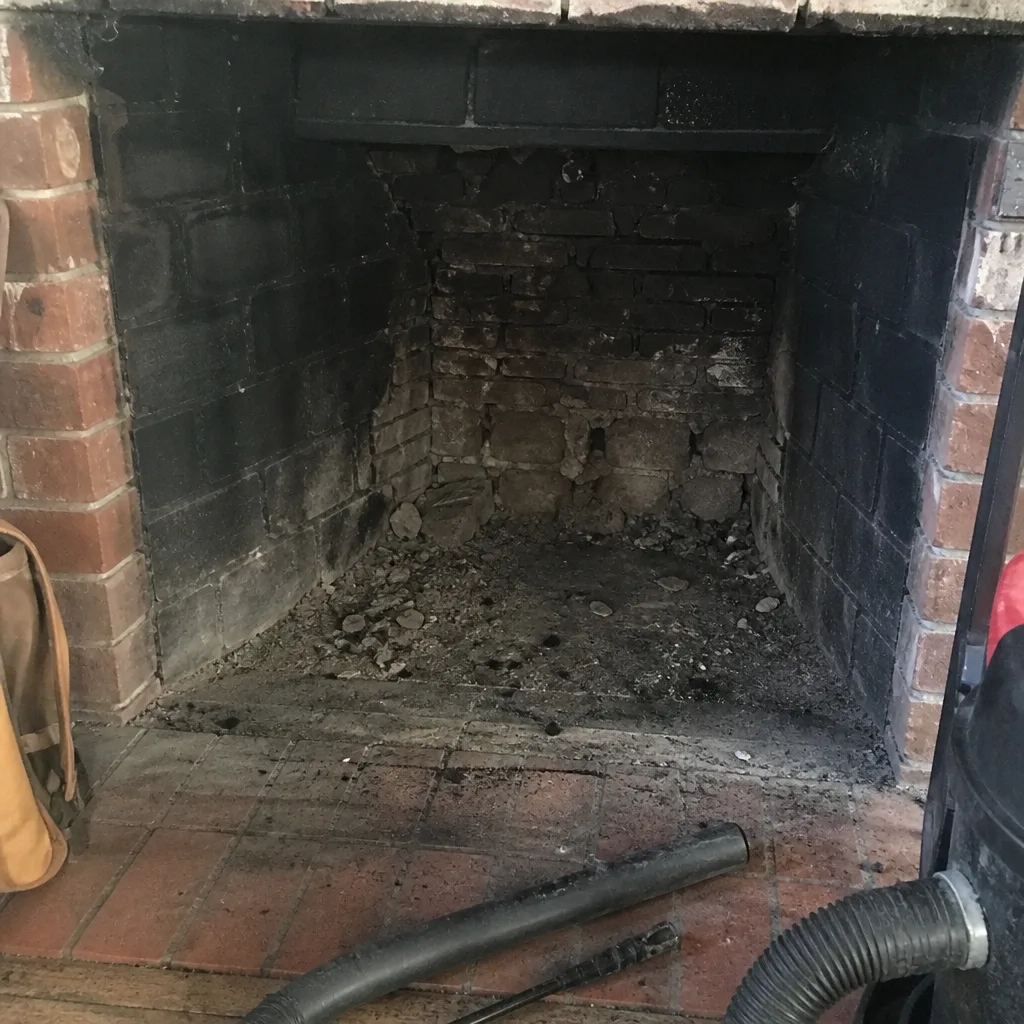 Before
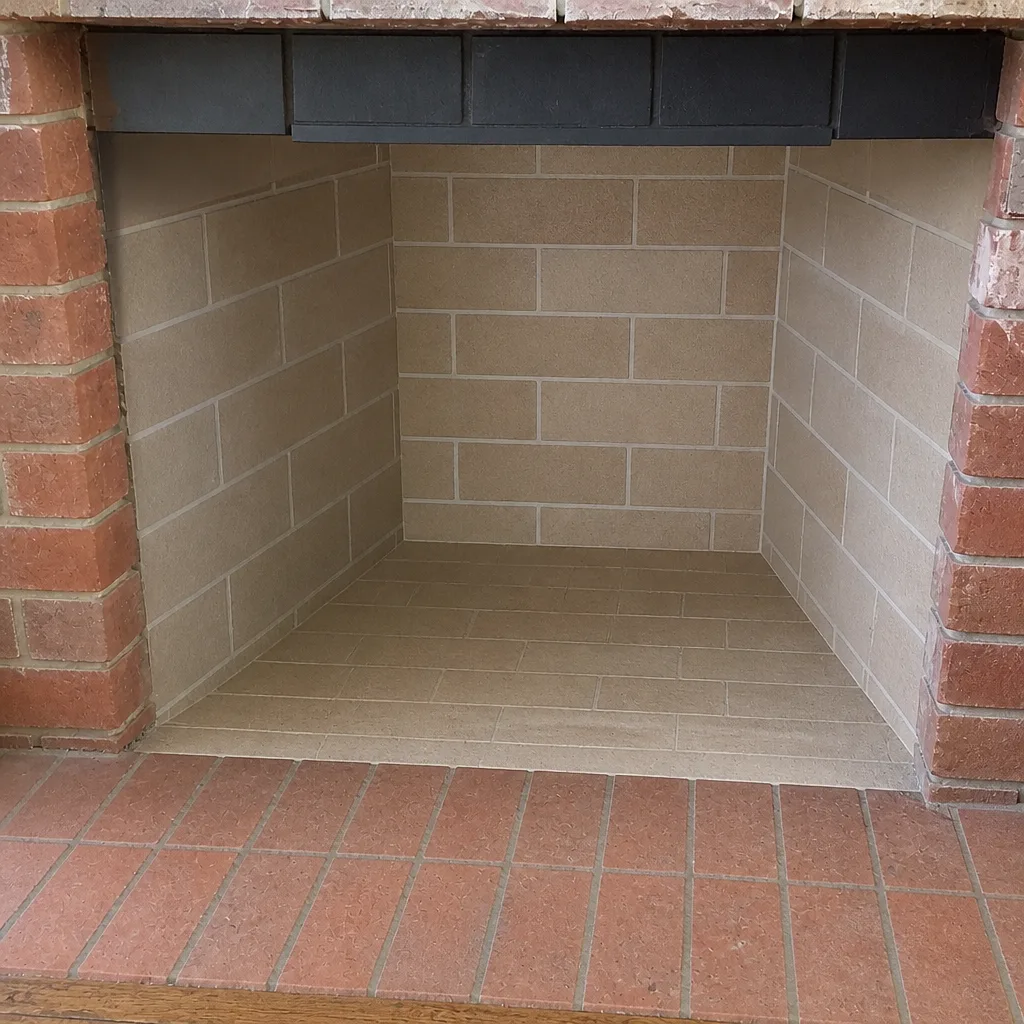 After
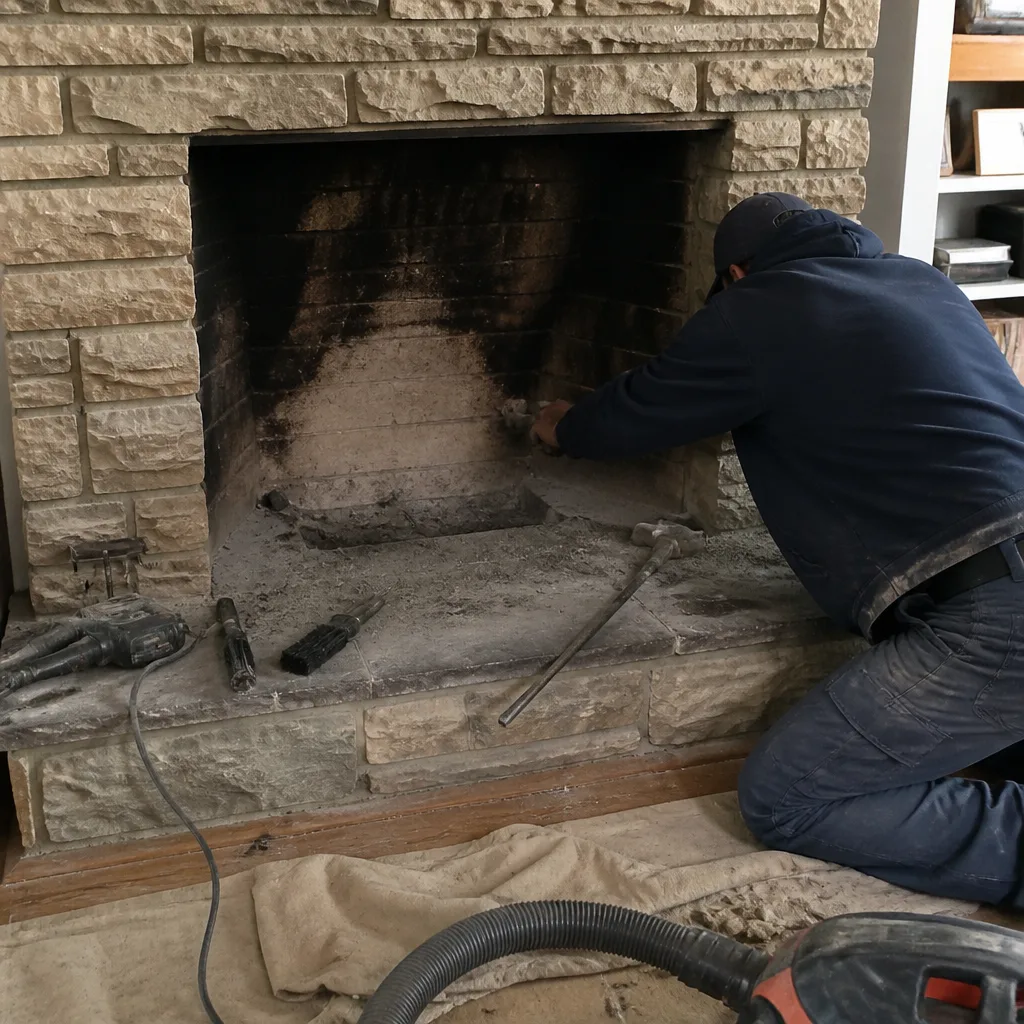 Before
 After
 Before
 After