
Top Signs You Need Chimney Cleaning Service – Don’t Ignore These
Most chimney warning signs show up after the preventable stage has already passed. White staining, smoke smell, slow draw: by the time you notice these, something has been quietly going wrong inside the flue for a while. This post works backward from the symptoms to the cause, so you know what you’re actually looking at. If you’d rather not sort it out yourself, call (833) 513-8375 and we’ll take a look at the whole system.
Why a Wood Smell With No Fire Means Something’s Wrong
A strong wood smell in a room with no active fire is a draft reversal sign, not a harmless quirk. It means the flue is pushing combustion gases back into your living space when the fireplace is idle. The smell is the diluted leading edge of what’s coming down the pipe: soot, creosote vapor, and carbon monoxide. On a cold morning, a flue that’s colder than the room pulls air downward until a fire warms it again. That’s a physics problem in your house, not a scent.
Most homeowners confuse draft reversal with smoke-back, but the two have different causes and different fixes. Draft reversal happens when the pressure balance is off: a cold flue, a tight house with strong exhaust fans running, or a flue that’s shorter than the appliance needs. Smoke-back is what happens during a fire, when the smoke rolls out of the firebox instead of up the chimney. That’s usually a blockage, a closed or partly closed damper, or a flue that’s undersized for the opening. Draft reversal clears when the flue warms. Smoke-back doesn’t, and it usually gets worse the hotter the fire burns. The first fix is often a top-sealing damper or a proper cap. The second is a sweep and inspection. We tell you which one you have, not just that you have a problem.
What White Staining on the Exterior Is Really Telling You
Efflorescence – the chalky white staining that creeps across brick – is not a cosmetic issue. It’s moisture moving through the masonry, dissolving salts from inside the brick, and leaving them on the surface as the water evaporates. The stain is only the visible part. The water behind it is degrading the mortar joints, rusting the damper, and breaking down the flue tile from the inside out.
Here’s the part most articles skip: sweeping your chimney will not fix efflorescence. A sweep clears the flue. It doesn’t stop rain from coming in through an uncapped flue, it doesn’t correct a crown that’s cracked and draining water into the masonry, and it doesn’t seal the brick face. Those are chimney cap & crown problems, and they need to be diagnosed before the moisture reaches the interior. In our experience, the white stain is the first visible sign of a water problem that’s been running for at least a full season. Sometimes longer. A proper inspection through Wakefield Chimney Sweep Co covers the crown, cap, flashing, and flue lining as one system, and we tell you which piece is actually leaking rather than selling the whole chimney.
The Sound Signature That Separates a Blockage From a Creosote Restriction
Your chimney talks if you listen. A muffled draw, a hollow whoosh, a scratching or rustling sound when the fire isn’t lit: these are different problems, and they aren’t interchangeable.
- Muffled, hollow draw. Air is moving through a restricted path. Usually creosote buildup on the flue walls, sometimes stage three, sometimes a partially closed damper that hasn’t been opened cleanly. It can also be a nesting bird or squirrel, depending on the season.
- Scratching or rustling. Something is living up there. Chimney swifts, squirrels, starlings, and raccoons all set up shop in uncapped flues. This is a blockage problem, and it needs removal before anything else.
- Whistling when the fire dies. A sign of a draft that’s too strong or a cap that’s too restrictive. The cap clears pressure at the flue mouth, and a mismatched one can choke the draw.
- Thumping or rattling on cold days. Often a flue tile spalling and dropping, which points to a lining problem, not a sweeping problem.
The sound is the tell. Creosote restrictions build up slowly and the draw gets quieter and quieter. Blockages happen fast and the sound changes overnight. We can usually guess which one it is from a phone conversation. The inspection confirms it.
“I Never Burn Wood” Doesn’t Get You Out of a Sweep
A clean-burning gas fireplace still builds up debris, and skipping sweeps because “there’s no wood in it” is one of the most common calls we take. Gas fireplaces produce water vapor as a byproduct of combustion. That moisture combines with dust, pet hair, and fireplace emissions to form a sticky film on the flue walls. Over time it collects into a deposit that looks a lot like creosote and behaves like it too. Gas fireplaces also discharge carbon monoxide, and a blockage doesn’t care what fuel made it.
A vented gas log set, a direct-vent fireplace, and a vent-free gas heater all need periodic inspection. The inspection schedule depends on how much you run the fireplace, not on the fuel type. Vented gas appliances typically need a check and cleaning on a routine schedule, and a carbon monoxide test at the flue is part of a proper inspection. We recommend commissioning a carbon monoxide alarm near your fireplace if you don’t already have one. It’s a $30 piece of hardware that lets you sleep. If something comes back into the room, you’ll know.
The Brown Oil Stain Around the Firebox You’ve Been Ignoring
If you’ve got a dark brown or rust-colored oil stain on the wall above or around your firebox, and you’ve been treating it as a cosmetic issue, don’t. That stain usually points to two things at once: a missing or damaged rain cap letting direct water in from the top, and a crack or failed joint in the smoke chamber or flue tile letting moisture seep through the masonry. It’s a sign that a level two inspection is overdue.
A level two inspection uses a camera to look at the inside of the flue that a standard visual check can’t see. It’s the difference between “the firebox looks fine” and “we can see the crack in the lining tile that’s been wicking water into the wall.” We include camera inspection and a photo report on every sweep and inspection, so you see what we see. You don’t have to take our word for it. If the lining holds up, we tell you to keep going. If it doesn’t, we give you options, including HeatShield resurfacing that restores a deteriorating flue without a full liner replacement. Most sweep companies can’t offer that option. We can. It’s often the difference between a resurfacing job and a five-figure replacement.
When It’s Time to Call a Pro
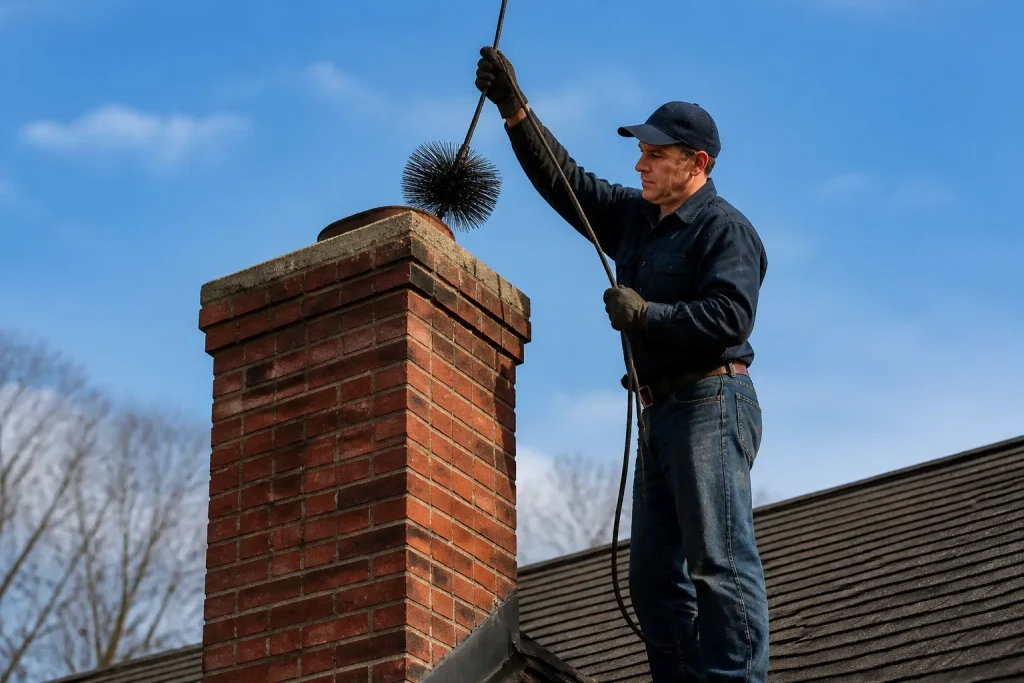
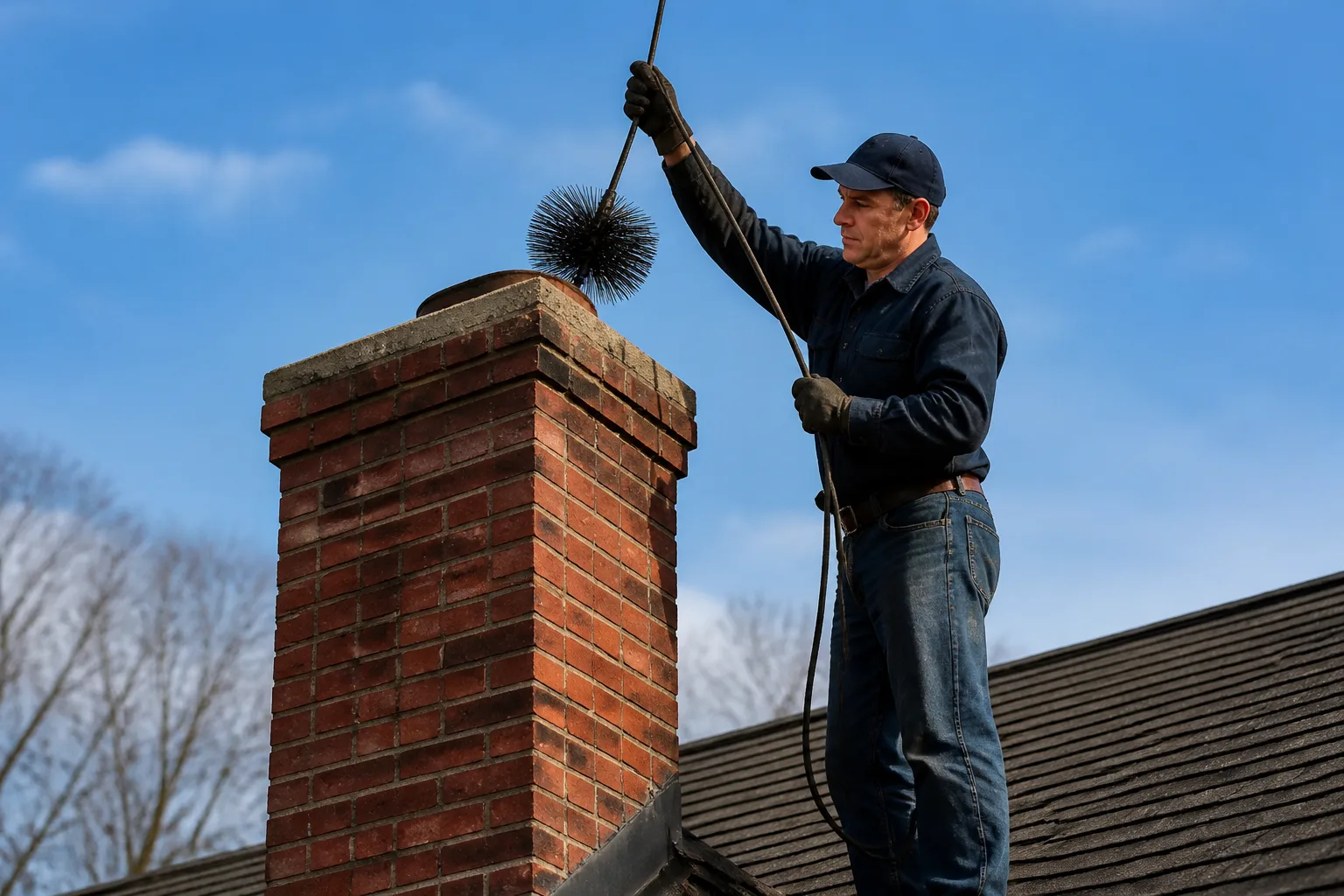
Some of what we’ve covered is safe to handle with a flashlight and a closer look. Soot dust that wiped clean on the hearth? That’s normal. A brown stain above the firebox, smoke rolling out of the firebox on start-up, or a hollow muffled draw? That’s a call. What you should not do is climb onto the roof for a look at the crown, try to snake out a blockage through the flue, or attempt to inspect your own firebox lining. Soot is a suspected carcinogen, creosote burns at temperatures that can crack flue tiles, and roof work at height on a chimney is how people fall. We carry the camera, the ladder, and the training for it. Our technicians have up to 14 years of experience, and we’ve seen what happens when a homeowner tries to be the inspector.
The Wakefield Chimney Sweep Co approach is one team through the whole system. From cap to firebox, we handle the sweep, the inspection, the crown, the fireplace repair, and the lining. We install and service products from Olympia Chimney, DuraFlex, Famco, and Copperfield because those are the names that hold up inside a chimney. Hardware-store substitutes don’t. One inspection, one company, every repair handled by the same crew that found the problem.
Related services in Wakefield: a routine chimney sweep is where most problems get caught early, and fireplace repair is the right next step when the firebox or damper has already failed.
The Bottom Line
Every sign in this post is really a cause in disguise. Draft reversal, efflorescence, muffled draw, oil stains around the firebox: by the time they show up, a sweep alone may not solve them. The right move is an inspection that looks at the whole system and tells you the truth about what needs fixing and what can safely wait. We recommend a sweep annually if you burn wood regularly, and an inspection when any of the signs above appear. Nothing is recommended without camera evidence you can see for yourself. And when work can wait, we say so.
If you’re in Wakefield and need help, Wakefield Chimney Sweep Co offers free estimates. Call (833) 513-8375. We answer 24/7. Fast dispatch from 7am to 7pm, Sunday through Friday.
Frequently Asked Questions
The strongest signs are a wood smell in the room with no fire lit, a muffled or hollow draw, white efflorescence staining on exterior brick, a brown oil stain near the firebox, or scratching sounds in the flue. Any one of these is reason enough to book an inspection. Call (833) 513-8375 for a free estimate.
Once a year if you burn wood regularly, and once a year for gas appliances too. Gas produces moisture and deposits even though there’s no visible smoke. If you burn seasoned hardwood in a properly drafting fireplace, once a year is the general standard; if you burn often or notice any of the signs above, don’t wait the full year. Call (833) 513-8375 to schedule.
Sound and speed. A blockage usually appears suddenly with scratching, rustling, or a hard muffled thump, and the draw changes overnight. Creosote buildup is gradual: the draft gets quieter over weeks or months and the fire burns slower. Both need professional attention, and both show up in a camera inspection. Call (833) 513-8375 and we’ll talk through what you’re hearing.
Creosote accumulates in the flue, restricts the draft, and at high concentration becomes the fuel for a chimney fire. Carbon monoxide can back up into the living space, and moisture in the masonry breaks down mortar and tile over time. Skipping a year is rarely catastrophic, but skipping several compounds the problem. Call (833) 513-8375 for an honest assessment.
Written by the team at Wakefield Chimney Sweep Co.
Need Chimney Cleaning Help?
Call Wakefield Chimney Sweep Co - the local pro we connect you with is licensed and insured, with free written estimates in Wakefield.
(833) 513-8375