
Chimney Sweep: Repair or Replace? How Wakefield Homeowners Decide
A $400 liner patch on a flue with a shifted crown and an open mortar joint isn’t a repair. It’s a timed failure, because the moisture that cracked the liner in the first place is still getting in. That’s the part most homeowners in Wakefield miss when they’re weighing fix-it-now against tear-it-out. The repair-or-replace call isn’t really a price comparison. It’s a question of what failed first, and whether the repair you’re being quoted addresses that failure or just the symptom it left behind.
If you’d rather have someone walk the flue with a camera than guess from the ground, call (833) 513-8375. We answer 24/7. Fast dispatch from 7am to 7pm, Sunday through Friday.
Why Repair or Replace Isn’t Just About the Price Tag
Two chimneys can show the same cracked tile and need opposite answers. The difference is what caused the crack. Water getting in through a failed crown will keep finding its way to the flue no matter how many times you patch the interior. A flue that cracked because of a one-time chimney fire in a system that’s otherwise sound is a different story, and a targeted repair can serve it for years.
So the dollar comparison has to come after the diagnosis, not before. A $400 patch on a compromised system is money spent extending the life of a component that’s failing for a structural reason. A $2,000 liner replacement on a flue that only needed a crown rebuild is money you didn’t have to spend. Both mistakes happen when somebody quotes a fix without checking the whole system first.
At Wakefield Chimney Sweep Co, that sequencing is the whole point. One inspection. One company. Every repair handled in-house, so the person who diagnoses the problem is the person accountable for the fix. Five service categories cover the full system: chimney sweep, inspection, cap and crown, fireplace repair, and chimney repair.
The Three-Part Diagnostic Sequence
Before any single component decision gets made, three things get evaluated. Skip one and the repair-or-replace conclusion is built on sand.
- Flue integrity. A camera run down the flue shows tile condition, gaps, offset joints, and corrosion on a stainless liner. This is where you find out whether the flue is sound, repairable, or done.
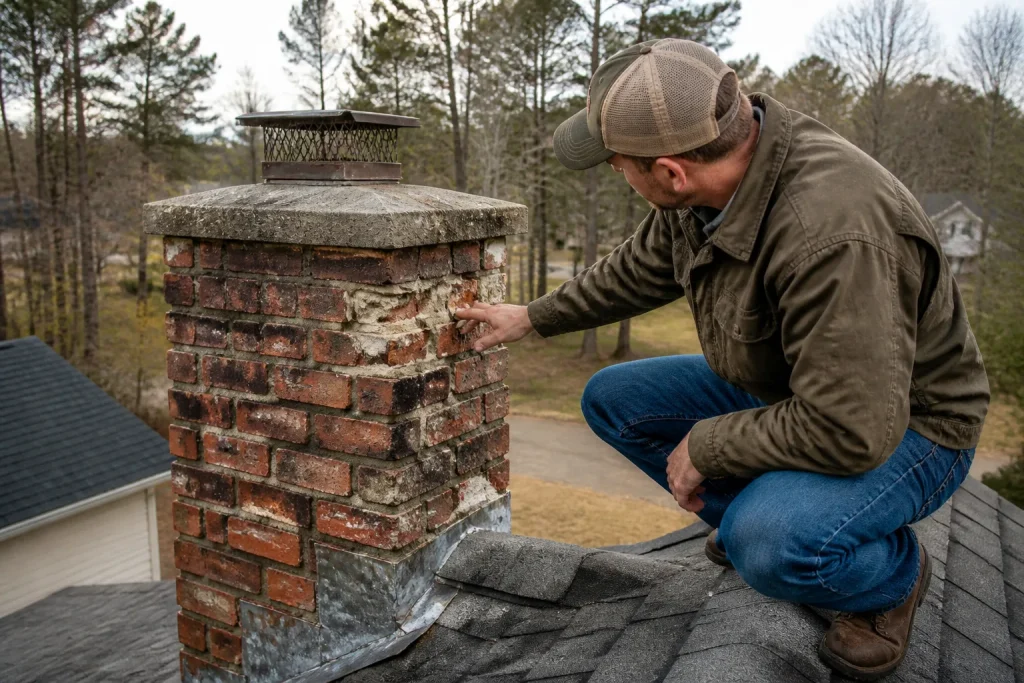
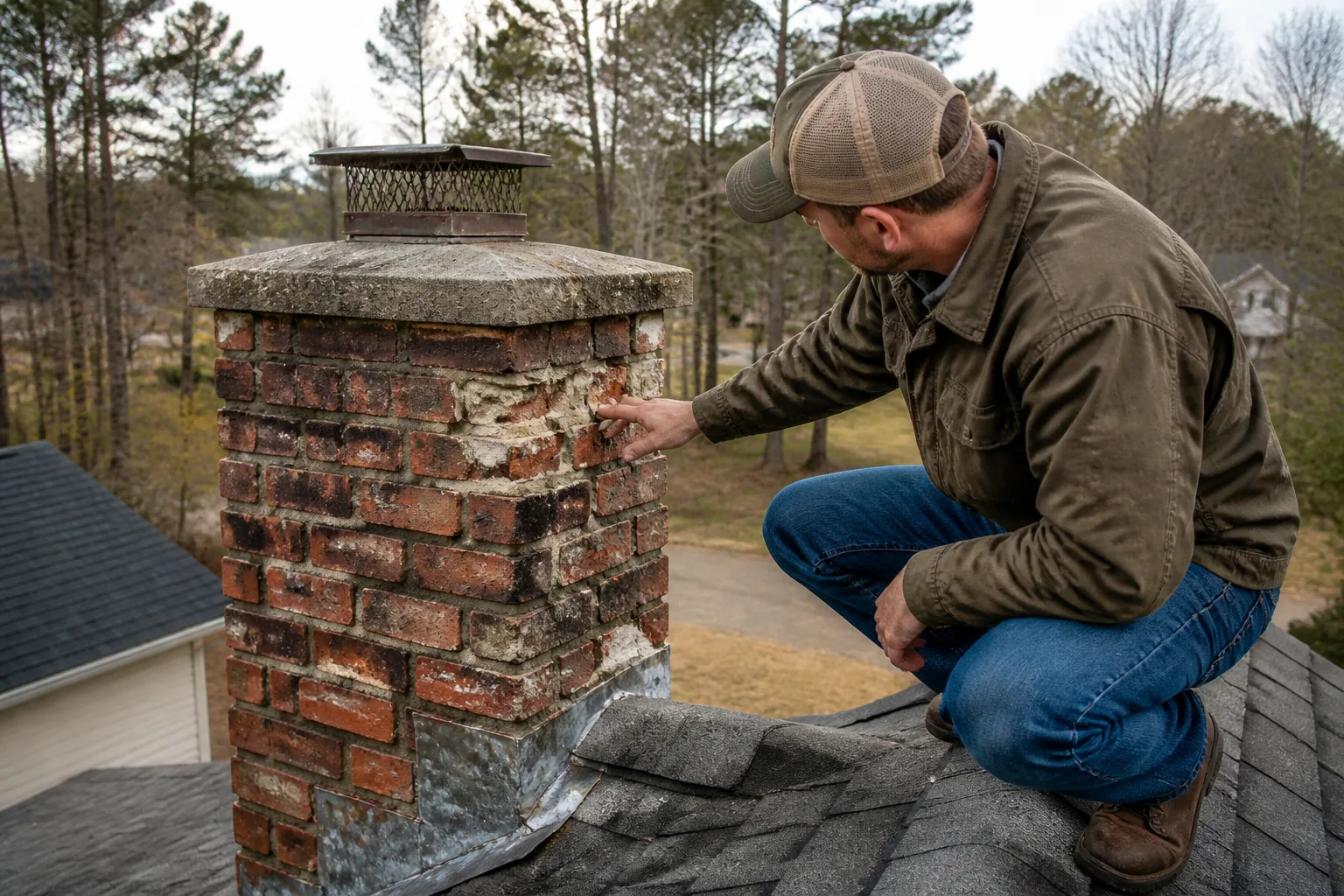
- Crown and cap condition. The crown is the concrete cap at the top of the chimney that sheds water away from the flue. Cracks there send water straight down the flue. A missing or damaged cap lets rain and animals in. Either one can be the root cause of interior damage that looks like a flue problem.
- Exterior masonry. Spalling brick, deteriorating mortar joints, and staining on the exterior tell you whether water is getting in from the outside in. That moisture works its way inward toward the flue over time.
All three get checked before a recommendation is made. A liner quote given without a crown inspection is a guess. In our experience, the chimneys that come back for repeat repairs are usually the ones where only the obvious component got addressed. When you call Wakefield Chimney Sweep Co, the inspection covers the full system, and the findings are resolved by the same company rather than handed off to a subcontractor.
Failure Patterns That Mean Replacement, Not Repair
Some problems are repairable. Others are a signal that the component has reached the end of what it can do. These patterns fall in the second group.
- Pinhole corrosion on a stainless liner. Once corrosion has eaten through the wall in spots, patching one hole just moves the problem to the next thin spot. The liner is failing from the inside out.
- Offset flue tiles. When tile sections have shifted out of alignment, the gaps between them can’t be reliably sealed by patching. A flexible liner system like DuraFlex can navigate the offset and reline the full run, which is exactly the job rigid-liner installers turn down.
- Spalling firebrick below the smoke chamber. Firebrick that’s breaking down in that zone means the firebox assembly is failing at a structural level. A patch on the surface won’t stop it.
Those three cases point to replacement because the failure is happening in the material itself, not at a joint or a surface. Repair in those cases buys time, not a fix. And time on a failing liner is time you’re using the chimney with a compromised flue.
What HeatShield Resurfacing Changes About the Math
There’s a middle option that a lot of sweep companies can’t offer, and it changes the repair-or-replace decision for a specific group of chimneys. HeatShield is a resurfacing system for the interior of a clay flue. When the tiles are intact but the interior surface has deteriorated, or when gaps and cracks exist between tiles but the structure itself is sound, HeatShield can restore the flue interior without a full liner replacement.
That capability matters because it fills the gap between “patch it and hope” and “reline the whole thing.” A flue with a sound structure and a worn interior is a candidate. A flue with offset tiles, spalling, or a failed liner is not. The inspection is what tells you which one you have.
We tell you exactly what your chimney needs and nothing it doesn’t. If HeatShield can serve your flue, that’s the recommendation. If it can’t, a DuraFlex or Olympia Chimney liner system is on the table. The decision follows the diagnosis, not the other way around.
How Material Grade Affects the Repair-or-Replace Decision
A professional-grade liner replacement outlasts two rounds of budget patching. That’s the practical version of the math. Budget patching tends to run on a shorter clock because the material and the method don’t hold up to the same conditions. Do it twice and you’ve often spent close to what a proper replacement would have cost, and you’ve still got the original problem underneath.
This is where material sourcing matters. We work with professional-trade chimney brands, including DuraFlex, Olympia Chimney, Copperfield, and Famco. These are the materials the trade installs on systems meant to hold. Hardware-store substitutes and generalist handyman patches don’t carry the same performance expectations, and they aren’t installed with the same understanding of how the flue behaves.
Wakefield Chimney Sweep Co uses the same materials the industry installs in commercial buildings. Half the repair-or-replace confusion in Wakefield resolves once you’re comparing a properly installed trade-grade repair against a replacement, rather than a budget patch against a full tear-out.
Related services in Wakefield: if the failure traces back to the top of the chimney, start with chimney cap & crown. If the firebox or damper is the problem, fireplace repair covers that side of the system.
When a Partial Repair Is the Right Call
Not every chimney needs a liner. When the structural system is sound and the damage is confined to one component, a partial repair is honest and sensible. The crown gets rebuilt. The cap gets replaced. A mortar joint gets repointed before it opens further. The flue gets swept and inspected, and you’re back to burning with a system that’s doing its job.
What makes a partial repair a good call is the diagnosis behind it. If the flue is intact, the masonry is holding, and the crown is doing its job after the repair, there’s no structural failure to chase. The repair addresses the actual failure point and the system keeps working. In our experience, that’s the outcome on a good share of the chimneys we see in Wakefield, and it’s the one we’d rather give you when it’s accurate.
The realistic expectation to attach to a partial repair: it holds as long as the underlying structure holds and the water stays out. Keep the crown and cap in shape, get the flue swept on schedule, and a sound system with a repaired component can serve for a long stretch. The failure mode to watch is the same one that started the problem, so the crown and cap condition matters as much after the repair as before it.
When to Call a Pro
Chimney work involves heights, fire, and carbon monoxide. The flue carries combustion gases out of your home, and a compromised flue can let those gases back in. That’s a job for a trained professional, not a weekend project. Climbing a roof to inspect a crown, running a camera down a flue, and diagnosing a liner are all work that carries real risk if done wrong, and an amateur repair on a flue can leave you with a system that looks fixed and isn’t.
Call us when you see smoke coming back into the room, staining on the exterior masonry, a crown that’s visibly cracked, or a flue that hasn’t been looked at in a while. A free estimate from Wakefield Chimney Sweep Co starts with the inspection and the facts.
What the Written Diagnostic Report Includes
Every inspection from Wakefield Chimney Sweep Co ends with a written report. You get the camera findings, the condition of the flue, crown, cap, and exterior masonry, and a recommendation with the reasoning behind it. Our technicians have up to 14 years of experience reading those findings, and the report is written so you can follow the logic yourself.
That documentation matters if you’re selling a home and need to show a buyer the chimney’s condition. It matters if you’re filing an insurance claim and need to establish what was damaged and when. And it matters for you regardless, because a chimney decision made on a written diagnosis is one you can revisit with confidence. The report is also how we hold ourselves to the “nothing it doesn’t” standard: if we recommend a repair, the reasoning is in the document.
From cap to firebox, Wakefield services the full system. Wakefield Chimney Sweep Co handles the inspection, the sweep, and the repair under one roof, so the findings and the fix come from the same place.
What happens when you call
- 1
A real person answersNo phone trees – you reach a local pro.
- 2
You get an upfront price rangeHonest numbers before anyone is dispatched.
- 3
A background-checked tech heads outLicensed & insured, dispatched right away.
- 4
You approve before work beginsNothing starts until you say go.
The Bottom Line
Repair or replace comes down to three questions. Is the flue structurally sound? Are the crown and cap keeping water out? Is the exterior masonry holding? Get those answered before anyone quotes a single component, and the decision usually makes itself.
- Failures in the material itself, like pinhole corrosion, offset tiles, or spalling firebrick, point to replacement.
- Failures in a surface or a joint on a sound structure can often be repaired, and HeatShield resurfacing covers a middle ground many companies can’t offer.
- Material grade matters: a trade-grade liner or resurfacing job outlasts two rounds of budget patching.
- A written report makes the decision reviewable, whether you’re staying put, selling, or filing a claim.
If you’re in Wakefield and need help, Wakefield Chimney Sweep Co offers free estimates. Call (833) 513-8375. We answer 24/7. Fast dispatch from 7am to 7pm, Sunday through Friday.
Frequently Asked Questions
A standard chimney sweep is priced per job by a written estimate, and the estimate is free. The sweep itself is usually the smallest line on the bill. The larger costs come in when the inspection turns up crown, cap, or flue work. Call (833) 513-8375 for an exact quote. Estimates are free.
Only if the flue has actually failed in a way that can’t be repaired. Pinhole corrosion on a stainless liner, offset flue tiles, and spalling firebrick point to replacement. A flue with a sound structure and a worn interior can often be resurfaced with HeatShield instead. The camera inspection is what settles it. Call (833) 513-8375 to get that answer for your chimney.
The general rule is once a year for a wood-burning fireplace that sees regular use, and more often if you burn heavily. A gas fireplace still needs an annual inspection even though there’s less creosote to clear. The point of the yearly visit is catching crown and flue problems before they turn into a repair-or-replace decision. Call (833) 513-8375 to book a sweep and inspection.
Creosote builds up in the flue, and that’s the fuel for a chimney fire. A cracked crown lets water into the flue, and that water works at the liner and the masonry a little more each season. A compromised flue can also let combustion gases back into the living space instead of up and out. None of this announces itself early. Call (833) 513-8375 and we’ll tell you exactly what your chimney needs, and nothing it doesn’t.
Sometimes it can wait, and we’ll tell you plainly when that’s the case. A sound system with a minor issue that isn’t actively letting water or gases in isn’t an emergency. A failing liner or an open flue with a damaged crown is a different situation, and that’s when the repair moves up the list. The written report tells you which one you’re dealing with. Call (833) 513-8375 for a free estimate.
Written by the team at Wakefield Chimney Sweep Co.
Need Chimney Cleaning Help?
Call Wakefield Chimney Sweep Co - the local pro we connect you with is licensed and insured, with free written estimates in Wakefield.
(833) 513-8375